
-
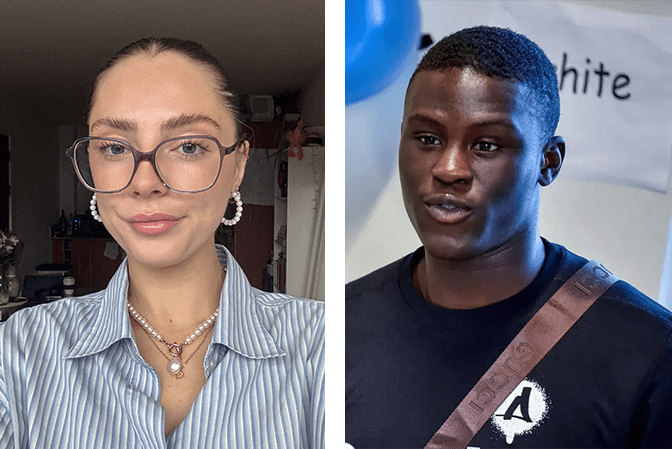
In the Unlimited Confines of My Creativity, I Was Free: Hannah Branston in Conversation with Ade Adedeji
Hannah Branston and Ade Adedeji on art and activism.
-
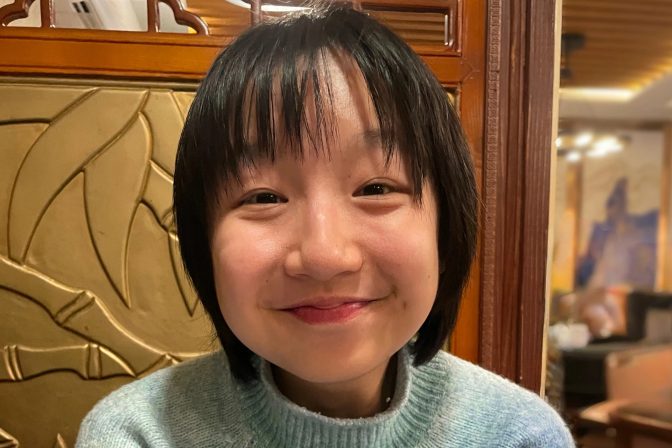
Leaping Seasons
Hongyu Jasmine Zhu on precious memories with her mother.
-
Marc Owen Jones, co-editor of a new book exploring the personal stories behind the Arab Spring’s ‘forgotten front’, shares his experiences of Bahrain as a child growing up and now.
-
Marc Owen Jones, co-editor of a new book exploring the personal stories behind the Arab Spring’s ‘forgotten front’, shares his experiences of Bahrain as a child growing up and now.
-
Atef Abu Saif discusses his latest publication – a collection of diary entries from the Gaza Strip – and reports on Gaza’s thriving cultural scene.
-
In 2012, activist and blogger Raif Badawi was convicted for ‘insulting Islam through electronic channels’. He was sentenced to a fine of one million riyals (£175,000), ten years in prison and 1,000 lashes. To mark Saudi Arabia’s national day (23 September), here is an extract from Badawi’s forthcoming book.
-
A PEN Atlas Q&A with Aleksandar Hemon, whose novel The Making of Zombie Wars is published by Picador Books this month.
-
On the occasion of the publication of her latest novel, Elena Ferrante discusses her creative choices and her desire to remain anonymous.
-
Ahead of his appearance at Edinburgh International Book Festival, Jesús Carrasco muses on writing as work and why perseverance makes poetry.
-
The Independent Foreign Fiction Prize-winning author of The Iraqi Christ responds to the European refugee crisis.
-
Acclaimed journalist and activist Lydia Cacho responds to the murder of the Mexican photojournalist Rubén Espinosa.
-
Acclaimed journalist and activist Lydia Cacho responds to the murder of the Mexican photojournalist Rubén Espinosa.
-
Roland Gulliver, Associate Director of Edinburgh International Book Festival, shares thoughts on this year’s theme, Trading Stories.
-
Russian writer Kirill Medvedev discusses intellectual property, the concept of the common good and his vision for the future of ideas.
-
Dorothy Tse investigates the role of literature in Hong Kong’s pro-democracy Umbrella Movement, and asks what the future of Hong Kong literature is.
-
A PEN Atlas Q&A with Etgar Keret, who is in the UK promoting his PEN-supported essay collection The Seven Good Years.
-
Translated from the Spanish by Nick Caistor. I have never seen any difference between personal experience and fiction. We never invent as much as when we are recounting what has happened to us. What is ‘lived experience’ if not debatable traces, fantasies, false memories, lacunae we fill with realism or fables? Strictly speaking, my project…
-
Benjamin Paloff sheds light on the life and work of Richard Weiner (1884–1937), widely considered to be one of the most important Czech writers of the 20th century even though his writing was suppressed until 1989.
-
Investigative reporter Roberto Saviano discusses his latest book Zero Zero Zero, the global cocaine trade, and the personal cost of speaking the truth.
-
Ahead of his appearance at Ledbury Poetry Festival, poet and translator George Szirtes writes on the lyricism and wit at the heart of poetic protest.
-
The author of PEN-supported novel Morning Sea discusses links between writing, revolution and dreaming, and Italy’s complex relationship with emigration
 PEN Transmissions