Max Porter’s 2026 PEN Lecture
PEN Transmissions is English PEN’s magazine for international and translated voices. PEN’s members are the backbone of our work, helping us to support international literature, campaign for writers at risk, and advocate for the freedom to write and read. If you are able, please consider becoming an English PEN member and joining our community of over 1,000 readers and writers. Join now.
Max Porter delivered English PEN’s annual PEN Lecture in Newcastle, UK, on Wednesday 29 April 2026, in partnership with New Writing North and the Newcastle Centre for Literary Arts. The Lecture is also published in Wasafiri.
~
Do you know this Robert Lowell verse?
Pity the planet, all joy gone
from this sweet volcanic cone;
peace to our children when they fall
in small war on the heels of small
war — until the end of time
to police the earth, a ghost
orbiting forever lost
in our monotonous sublime.
Do you know the line in the PEN Charter that says, ‘PEN DECLARES FOR A FREE PRESS AND OPPOSES ARBITRARY CENSORSHIP IN TIME OF PEACE?’
‘IN TIME OF PEACE’ – for whom? What does peace mean? Does it mean stockpiling atomic weapons, leased from our lethal unreliable partners in crime? Does it mean the military industrial status quo? Does it mean proxy wars in more countries than I could list? Does it mean the continuation of a forever war of exploitation, inequality, regime change, that seeks at all costs to preserve the supremacy of one way of life over any other? In this time of corruption, surveillance, torture, immigration raids, detention, and weaponised borders, need we clarify again and again that our peace rests on bloody foundations, that the geopolitical logic of our civilisation long ago relied on a criminal – if not pathological – abandonment of principles of peace?
To sit in our lecture halls and meeting rooms and call this a time of peace when atrocious crimes against civilians are at such a scale that experts warn of ‘no such thing as humanitarian law’, a ‘critical breaking point for humanity’ – when does acceptance calcify into collusion?
When Voltaire said ‘civilisation does not diminish barbarism, it perfects it,’ could he have imagined the bombastic depth and range of contemporary barbarism, as perfectly unthinkable as the utopian alternatives, perfectly unnavigable, just as my propositions in this speech are perfectly, absurdly, bombastically romantic; is that my soldier/journalist/politician/neighbour just laughing his arse off?
First and foremost, don’t we urgently need a reclamation of the word ‘Peace’ from the genocidaires and criminals who misuse it, just as they misuse ‘Defence’, ‘Security’, ‘Order’? What do we do when language itself has been rendered meaningless?
Speaking of meaningless, speaking of barbarism, speaking of monotonous sublime: this is the golden era of peace-washing, this is the gilded, blood-spattered circus era of Trump’s Foundation of PEACE, where an assortment of felons and war criminals build fantasy developments on the unburied bodies of slaughtered civilians, the newly AI glitching iteration of a centuries-old oil and mineral-hungry colonial barbarism. Is there nothing new under the capital sun? Isn’t shutting USAID the ultimate act of violence? Won’t it kill more people than a thousand nuclear bombs could? Is it seven or eight countries that Trump, self-proclaimed ender of wars, has bombed since I started writing this speech? How many Tomahawk missiles each at a cost of three million dollars have America and Israel dropped on Iran and Lebanon since I started writing this speech? How many murdered, displaced, traumatised? To what end?
Is Pete Hegseth just the twenty-first century unhinged iteration of the psychopathic crusader-baron of the Middle Ages? Apocalyptic faux-Christianity wedded to colonial exploitation wedded to pure blood sport, video game TikTokified, erectile, industrial, wargame insanity wedded to industrial, and economic, and racial supremacy, with or without the permission or approval of the ruling hegemony, but acting ever so steadily and committedly, ever so doggedly, in its interests? Hasn’t it only ever sown chaos, hasn’t it only ever wreaked havoc? So why are we acting surprised?
Is pacifism a dangerous idea? Aren’t there countless instances in human history where non-violent policies or protests prolong conflict or sacrifice the vulnerable or gullible, or create dangerous martyrs, and therefore cause more deaths? Isn’t the logic of perpetual harm a sublime manifestation and evolutionary control mechanism of human nature? Is the proof not in the pudding, on and off the page? Am I sounding a little bit Churchillian? Churchill? Shall we play the evergreen social media game of ‘Was he a hero or a genocidal maniac?’ again and again, both and both, neither and nonsense, until we are calcified into immobile yelling machines while a handful of men in suits do it all over again?
Why am I writing this speech in questions? Have you read that book, The Interrogative Mood? Did you find it hard work? Did you find it somehow more alluring or fit for purpose than the social realist narrative modes we are more used to in a time of rampant existential crises? Am I so uncomfortable with the idea of a novelist being given a platform, being given any kind of authority or invitation to speak, to hold forth, to have opinion, that I am hiding behind this gimmick? Am I writing this speech in questions to find some kind of formal device that adequately sidesteps the speechifying lectern-easy novelist pontificating tone I find so hard to reconcile with the crisis – not only in my field, but in literacy, in the community, in the body politic? Do you mind if I stray from a rhetorical path more often than find it?
What about starting with a tone of peace? We know what it can’t be, don’t we? It can’t be the howling, braying debased hollering of the Westminster chamber; it can’t be the bought complicit mimicry of the newsmen; it cannot be the toxicity and propaganda of the tabloids; it cannot be the elite, exclusionary language of the academy. So, doesn’t it have to be a radically decentred sound? Doesn’t it have to be closer to communal improvised music than to discourse?
Am I inviting ridicule from the imaginary critic in my head and my real critics on the other side of the political collapse in order to flagellate? Am I desperately seeking a mode of honest, bewildered utterance because the sheer toxicity of the moment has defeated me? What Pankaj Mishra calls a worldwide ressentiment, the swarm of mass disillusionment… where do my peaceful feelings sit between collective impotent overwhelm and fantasies of violent revenge? And anyway, don’t you hate novelists opining? But don’t you love it when a novelist gives enough of a shit to stick their neck out? How to be both? Whether to be either?
Is this an apology? A humbling? Am I arguing against myself for want of an easier adversary than the savagely counterproductive online word storm?
Am I being deliberately, obstreperously, cowardly, anti-newsworthy? Did you hear about the left-wing British novelist who has called for peace? What is he, seven? Shall we all lay down our arms and read translated novellas? What good will that do?
Am I squandering the opportunity to make a point by issuing an ambient rallying call? Do I want to perform a certain vulnerability, bewilderment, formal collapse, insecurity, uncertainty, because I am so allergic to the alternatives? Am I tone-sick? Am I alone? Are we not lost?
Am I even a pacifist, really? Did I feel peaceful towards the settlers in Masafer Yatta as they came across the stolen hill to harass, intimidate, assault, burn, and plunder? Do I just want the unfairnesses, injustices, and technological imbalances removed? Do I believe in a fair fight? What’s it got to do with me?
Should literature stop feigning interest, mind its own bloody business? Does it need to keep itself separate, delayed, retroactive, abstracted? Should it proclaim its unearned and unfair advantage and slink off?
What would a literary opposition to violence even sound like? A poem? An improvised dulcimer drone? A manifesto? A workshop in a school? A strike? A delegation to our enemies? The sound of a human fist on a reinforced plastic shield?
Am I afraid to say what I think because of the climate we are in whereby truth and error, fact and fiction, report and mindless retort are all in the same whiplashed churn of comment and opinion, and I can’t bear the noise, and I can’t bear the madness, and I would rather address my questions to the dead than the living. And isn’t that just being a reader – let alone being a writer? And if I pose a question to 2025 that Hannah Arendt posed to 1935, am I simply hiding in the imaginary space, the imagined dignity, of what she called the vita contemplativa, paying lip service to an old intellectual hierarchy — is that it? Am I asking these questions because I am extinct, we are extinct, the reign of the written word is over, nobody reads, the political action is elsewhere, it is beyond the word? But do I mourn that? Are we resigned to this? Are we fighting? Do we need to find our teeth? What strange currency am I turning around in the grip of my queasy, corrupted, sickened English tongue when I even utter the word peace in an apocalyptic moment for so many — is the question one of a complete and utter failure of solidarity? And isn’t that the first question for a writer: who are we standing with, marching for, pledging allegiance to?
Is it ludicrous to ask?
Why have ideas of peace become fringe, laughable, when discredited bigotries and socioeconomic fallacies are peddled as the norm? Is it the scale of the financial imperative, the entanglement of profit and violence, that has wormed its way into our homes, our routines, our addictions, our spirits, and to acknowledge it as vulgar, pointless, immature would require too painful a reconfiguration? Is it too costly an experiment to entertain rebuilding a system along non-violent lines, cherishing the lives of others as we cherish our own, as writers do in our fictions all the time? Why is something that makes basic sense so roundly discredited? Is it the sheer weight of 14,000 wars on our collective conscience? Is this line of questioning naive, immature, oh god, Dad, am I a woke?
Are we so po-faced, strapped into our death cult, that we cannot see the joke is on us?
Milan Kundera said, ‘Indeed, the only truly serious questions are ones that even a child can formulate, only the most naive of questions are truly serious,’ so is the global community of writers a relentless question machine demanding no answers? Might we re-child our ideas of solidarity, of community, of survival – weren’t all utopias deemed childish compared to the big, grown-up work of bombing the fuck out of stuff, and Hurting People? Just because we are centuries deep into a violent way of doing business with the planet and one another, does it mean we cannot brainstorm some alternatives?
Am I seeking refuge in the simplicity of these ideals because of the atmosphere of the present, where every opinion is immediately contaminated by its associate opinions, or debunked by an automated counterfactual, or stored as evidence against future opinion by the frantically self-regenerating but unregulated industry of accusation and riposte?
Is this why the Times called me a hippy? Wasn’t I flattered really? In amongst the ads for 4x4s and Murdoch-sieved, middle English, welly boot populism, wasn’t it nice to be caught raging, weeping, and praising trees? Is any rational mind and functioning human heart not absolutely devastated? Shouldn’t we all be screaming? What spectacular sedative have we taken?
Aren’t you frightened? Of the coming weather? Of the state? Of yourself? Of pain? Of death from above? Of losing your loved ones, your home? No? Because we are the creators of those events, rarely the recipients. But would you allow me a second, in a public place, with witnesses, to say I am grieving, I am mourning for people I have never met, for babies I never rocked to sleep but love, dearly, desperately love, and if this opens me up to ridicule, please, sir, may I have some more? Please colonel, headmaster, vice chancellor, CEO, please can we have a politics of vulnerability? Can all emperors take off all new clothes? Am I calling for the triumph of earnestness over irony? Isn’t that a position almost uniquely ripe for ridicule in this climate, as Zack Polanski is discovering, but isn’t the braying mockery of the corrupted centre music to his ears?
Can we test a politics of pure solidarity, of concern? Of transience, change, gestures of kindness, cultures of dialogue, development, impermanence, flesh, not metal? Take off your suits, big egos, famous writers, important guests, award-winning cheeses, and beg for peace: can I beg for a break from the performance of strength? The most powerful man on Earth just shat his pants because not even he can win the war against the ageing body, but as Klaus Theweleit reminds us, he must forcefully subdue ‘any force that threatens to transform him back to the horribly disorganised jumble of flesh, hair, skin, bones, intestines and feelings that call itself human,’ use a new title, steal a new country, steal the word ‘peace’, use hair dye, bombast an army, post-truth piss, and artifice — may we be released from the war games men invented because they were so scared of being soft, susceptible, and scared?
Isn’t pacifism one of the only ideas we have left? Isn’t it radical? Might it be revolutionary?
Might there be more jobs for all of us in the peace-industrial complex? Might it be the key to our survival?
As the geriatric generation of tech innovators constantly tell us from their luxury retirement homes, the war we are fighting against the machine of our own making is now unwinnable. There will be no peace in the digital world, so the best we can wish for is stopgaps, security for those that can afford it. Wasn’t the alluring narrative of growth always really a fable of death – out of sight, denied, out of mind – and have we neglected the possibilities of life to such an extent that we are merely scrabbling for palliative techniques, ears blocked to the howls of our host, our kin, our system, our home?
Did you know that global military spending reached a record high of USD 2.7 trillion in 2024? Am I alone in finding that hard to comprehend? Does that not nag at one slightly while one is doing the weekly shop, sending what one can to Sudan, filling in one’s tax return… should we not all be kicking up somewhat of a FUSS ABOUT THIS? Did you know that only 3.5% of that 2.7 trillion would end global hunger? It could be done in the blink of an eye, but God forbid, get a life, dream on, don’t be insane/insane/insane/insane. Am I sounding like a broken record?
Am I risking my reputation as a ‘serious’ novelist by ranting on about the arms trade, standing outside the Elbit factory with a hand-painted sign, writing a fable for kids about dogs and bears fighting – do I give a shit? Should I keep my ideas about peace in the pages of an academic quarterly, for the knowing nods or condescending critiques of half a dozen other depressed leftists? Or should I leave them mildly abstracted, sieved by the literary mode du jour, peeking through the speech of my made-up characters but only terribly subtly? Are we not past subtlety? 100 years from Beckett, drifting around the endgame, yelping into our hand-held prisons – are we not utterly ridiculous?
Is this merely a political stance? Am I not simply showcasing my ideological bias, so allergic to nationalistic, militaristic, supremacist propaganda that I have gone away with the fairies?
Am I really so opposed to violence?
Do I want peace with racist patriots standing outside hotels housing migrants, swearing at children? Do I want peace with British men going to Calais and pouring detergent into refugees’ drinking water, calling themselves migrant hunters, or do I want to be part of a war against these men with the weaponry of law, reason, information, compassion, common sense?
How can we even formulate, let alone enact, a non-violent response to such uncompromising and relentless hatred – linguistic and actual? How might we reach the usually male actors within a violent system and release them from the briar of their pain, rage, and hunger for power, or has that ship sailed, is this a question for the children? And who am I to speak to someone who has been patronised, belittled, and cheated, and judge them for the inherent violence of the responses they feel are legitimate, urgent, and necessary won’t that make things worse?
We’re in a strange place, aren’t we? Activists seeking to disrupt the war machine, locked up without trial, on hunger strike, Quakers and nurses and retired doctors and children’s book authors and England’s greatest living poet, the ex-professor of poetry at Oxford being locked up for protesting a genocide — isn’t this an urgent crisis for anyone who writes, who reads? When any one of us can feasibly be arrested for writing the words ‘I OPPOSE GENOCIDE, I SUPPORT PALESTINE ACTION’, and our publishers can be charged under terrorism laws for selling our works, then surely the question of what writers do, and what words we use, and who decides what is true or not, what is a blank piece of paper, and what is an act of terror, is profoundly urgent? Have all these words – terrorist, protest, peace, genocide, law – been so emptied of meaning that we need some kind of emergency redefinition? Hal Foster asked: ‘What comes after farce in a post- truth and post-shame society, how to belittle a leader who cannot be embarrassed? What is the left to do when the right appropriates its cultural strategies?’
What comes after law, what comes after lawlessness?
What comes after never again?
What comes after the body of a distant other’s child? The body of our child? They are one and the same, so why are we pretending otherwise?
Why are the two groups most consistently wedded to pacifism veterans of war and writers? Veterans, because they have seen and know; writers because they have read books, wherein the horrors of war are laid bare and the correctness of the alternatives elucidated time and time again – but how laughable it seems to the men of industry to welcome veterans or writers to their busy, bloody feasting table, or am I being ridiculously simplistic?
As Richard Jackson asks, ‘How many military failures does it take to convince us that violence is actually a very poor tool of politics, and one that is highly unlikely to actually make things better?’ War is good for business, but is business all there is? Can the resolution to find alternatives to symbolic and actual violence only ever be a fantasy under capitalism? Is that the sound of someone at The Telegraph’s eyes rolling? Do I care? Didn’t they host the press conference where Suella Braverman said it was her DREAM to see migrants put on flights to Rwanda? Is she allowed a bombastic, sick, illegal, unrealistic dream? Are we only allowed to dream of profit, victory, security, defence? We all know these words mean death for someone else, don’t we? Shall we all just run headlong into extinction, beeping our horns, and revving our engines, and flinging anything that troubles us into prison? Out of sight, out of mind?
This is a problem of imagination, isn’t it?
Are we not all constantly hammering out the shape and depth and terms of our engagement, are we not all asking ourselves these questions privately? Can we not ask them together outside of violent binaries and crude oppositional politics? Am I asking these questions because I am defeated, disillusioned, disgusted? Are these questions the painful, performative cover-up for my misanthropic, nihilistic, real question which is: it’s over, isn’t it? Do I disagree so profoundly with myself that even to stand here speaking to you sickens me? Does the cultural body need time and time again to diagnose itself poisoned, sickly, dying? Does it need to nurture new growth, does it need rigorous pollarding, and will this not feel like violence?
Isn’t the best thing about PEN the history of its disagreements? Its arguments and inconsistencies and attempts to cross borders, to check we meant what we said when we gathered here last time?
Isn’t the Charter’s innate value as a template for disagreement? Didn’t HG Wells resign because of PEN’s bureaucratic inefficiency in supporting refugees? Didn’t Vargas Llosa resign because Jennifer Clement supported jailed Catalans? Isn’t this the organisational tree coppicing itself, growing strangely, naturally, through all its inconsistencies and discomforts?
Might PEN broker a peace between warring factions in our industry, in our culture, be the table at which fighting parties meet? Might it help insist that we keep fidgeting and squirming inside the definitions and terms we have inherited?
Should members of PEN ask awkward questions? In PEN’s own words, solidarity with Ukraine was ‘nonstop’, so why has it been partial or hesitant elsewhere? The protests last year at PEN America initiated a fundamental reckoning, didn’t they? Have we had double standards? Have we been biased? Have we been jeopardised, compromised, hijacked – isn’t that the point?
Is there a specifically English malaise when it comes to the sharp end of politics because this illusory peace gifted us the unearned and polluted advantage of stability from which to pontificate, judge, condemn, like the soft power world police, fattened by our own mirage of moral authority? ‘Alas, poor country, almost afraid to know itself’? And now, self-excommunicated from the European project, choked by rivers of our own shit – are we simply asleep? Has living in this notional time of peace robbed us of our senses? Shouldn’t PEN membership be booming as writers gather under an internationalist human rights banner? It cannot be apolitical, but could it be post-political? Could it be better than political?
Didn’t peace movements always have writers at the heart of things? Not only to clarify the futility, and document the agony, but also provide analysis, often of the handful of industrialists who truly benefit from conflict, and isn’t our job to show this and show this till we are blue in the face?
And didn’t it always necessarily involve a fight against our industry? Mark Twain’s ‘The War Prayer’ – a mighty anti-imperialist and pacifist gesture – was refused for publication because then just as now, aren’t fatuous justifications for war always louder than literature? Aren’t we now, as then, told to calm down, grow up, stop being hysterical? Aren’t the forces of anti-intellectualism, misogyny, and racism as potently intertwined as ever? Isn’t the absolute primal psychic reason for violence fear and hatred of the female, and can’t we see this as clearly on a gigantic industrial level as we can in the pages of our newspapers? Who’s afraid of a little psychoanalytical rummaging under our bonnets? Public calls for demilitarisation are met with the same linguistic tropes: ‘naïve’, ‘feeble’, ‘pathetic’, ‘childish’, ‘weak’. The suicidal pact with military spending is so obviously and tragically a patriarchal problem, so must we ask again and again the classic questions: ‘If not now, when?’ ‘Shall there be womanly times, or shall we die?’
When writers correctly and calmly suggested a festival funding model could be found without the support of hedge funds explicitly profiting from fossil fuel and military investment, weren’t we mocked, attacked, ridiculed, weren’t we told we were ruining the lovely, sweet egalitarian fairytale innocence and sweet, wine-sloshing delights of book festivals for everyone? But weren’t we the people who had actually worked the hardest for and with book festivals? And didn’t the festivals have their most successful year ever last year, because, of course, change is possible? Wasn’t that whole spectacle so revealing but also so counterproductive and depressing? Need we be forever locked into these patterns of attack and retort, these tapestries of snark and sneer, isn’t there a more productive approach? Is it so frightening to ask who pays and how they make their money? Aren’t there going to be some difficult conversations to be had? Do we need to smear and slander and resort to culture war insults every time someone has an idea for a cleaner or fairer world?
Left and right have melted into non-existent categories, we all agree: the great decline, the apocalyptic mode, you can’t say anything these days, none of us are free until all of us are free, everything’s broken, told you so, sold you a yes, sold you a no, gotcha, where did all the free speech warriors go? Do you want some whataboutery to go with your wishy-washy satyagraha?
Why is the dying political animal so defensive, can we not have better ideological palliative care?
Who’s afraid of a little transformative thinking?
Who’s afraid of a little anti-war sentiment?
Clive Bell’s pamphlet Peace At Once was confiscated by the Lord Mayor and burned in the streets, did you see? They were burning books in London town?
Do you remember Ernst Toller’s speech to PEN International during the rise of Nazism, do we see they are burning books in Berlin?
Do you remember Bertrand Russell was denied a passport to prevent him giving an anti-war speech at Harvard, when he asked in the shadow of the bomb, ‘Does man have a future?’ Do you remember when Lytton Strachey lost his job at The Spectator for his antiwar statements? Do you remember Sally Rooney could not travel to the UK because of her support for a proscribed organisation?
Is the suited and booted dying animal of the military industrial psychopathology so rattled? Must we invent new laws to lock up our activists, wait twenty years, rewrite history, then erect statues of them? The history of PEN International is a book of evidence; writers frighten power, so writers are exiled, banished, imprisoned, and we are used to seeing this abroad, and we mustn’t be surprised when we see it at home. Aren’t they rattled? Have they got to the judges? Will we defend the juries? They cannot even take questions from the audience, because what comes after lying? Only force? Only censorship and tyranny?
Isn’t this why PEN writers Writers for peace Peace Committee was established? To step forward when the contaminated political entity refuses? In the Balkans, in Russia, in Sierra Leone, in Mali, weren’t we forceful, even if inconsistent, in our solidarity? Didn’t we have the boundless reserve of moral clarity when all else was collapsing? Didn’t we have bodies we could use to cross borders? Should we not at all times be on an anti-authoritarian war footing, as a matter of principle, and on behalf of those who do not have these luxuries?
If there is a huge abyss between the way we see ourselves and the way we actually are, if there is a monstrous thing being done in our name, if we are a tiny cog in a lethal machine – don’t we need to see that reflected back at us in the shared mirror that is culture? If there is a reckoning, doesn’t it have to begin as a linguistic one? In the language of us, them, ours, theirs, owned, taken, owed, stolen, inherited, dependent, from here, from there, if this country needs to shake off an imperial delusion and find itself a proper meaningful, sustainable place in the New World Order then it might need to start with what it sees in the mirror, like the fable of the schooldays of Nigel Farage – does it matter what we did when we were reckless, feckless, privileged, ignorant, hateful younger versions of our reckless, feckless, privileged, ignorant, hateful contemporary selves? Is an apology enough? Might we not accept? Is there any escape from the shattering verdict that the ugly truths revealed are accepted, even celebrated, and we might need to go into exile from those closest to us?
Isn’t there an almost sociopathic gap between how we behave in our domestic spaces, what we value (the safety and health of our children, for example), and what we bestow upon the faraway other through our collective commitments, investments, and behaviours? Isn’t it bizarre? And if it is purely and ultimately a question of economic systems, might we invest even a fraction of what we invest in the machinery of war in the processes and tools of peace? Isn’t the evidence to do so utterly and magnificently overwhelming? How potent is the death drive? Wasn’t Rebecca West absolutely correct when she said, ‘We ignore this suicidal strain in history because we are constantly bad artists when we paint ourselves’? Do we need much, much better collective self-portraiture? Should we start with the fragile and damaging fantasies of mastery, control, and progress that leak out of the wounded and confused juggernaut of armed nation-states in their perpetual circus of theft?
If writers and artists are perfectly placed to shape the stories and collective reflections that might allow a change of direction, what’s making us such bad actors? Entrenchment? Laziness? Complicity? Defeatism? Fear?
Is it simply, in Allen Ginsberg’s blend of Jewish and Buddhist answers, a lack of rachmonis? An absence of compassion?
Aren’t writers ideally and almost uniquely well-positioned to do some of the re-engineering required to reframe the question of peace? We go into schools, we teach in prisons, we sit on charity boards, we meet people in bookshops and libraries, we travel to meet writers of different genres and languages – might we be in Vaclav Havel’s formulation ‘architects of some kind of rudimentary moral reconstruction’? Might we be the table, at which many can sit? If Brecht was correct that Society cannot share a common communication system so long as it is split into warring factions, are we not guilty of perpetual, scratchy, pointless wars between ourselves? Am I being lofty? Am I being unsophisticated? Am I being romantic?
Are we not handlers of ideas and tone, whether we are historians, novelists, or journalists? Are we not – in sometimes tiny, and in sometimes significantly bankrolled, ghoulishly bigoted, allied to fascist tech overlord ways – engineers of sensibility?
At four minutes to midnight, Nicholas Humphreys wrote, ‘We forget sometimes our own power. What happens when an irresistible force meets a movable object? Why, it moves.’ Shall we move?
Enemies of compassion, decency, justice walk among us, and are mobilising with staggering efficiency – surely, we must do the same? ‘Our age seems entirely unfitted for such a task,’ wrote Simone Weil in 1937, observing murderous absurdities in the economic and political systems of her time, and might we go as Simone did, to where the war is being waged, and put our bodies in the way? Isn’t this why seeing Alice Oswald carried into a police van means more to me than a thousand tweets or Instagram posts, because she has pushed past the stalemate in a precisely poetic way? She has married the force of language with the gesture of the body in space to create meaning, and won’t that gesture last? Won’t it reverberate? Writers have often returned from war and issued warnings about the profoundly human oscillation between savagery and progress, and their warnings have, fatally, gone unheeded, so what is the mechanism by which we offer not a warning in fable form, but an insistence, an urgent intervention, a living proof that this oscillation is unsustainable. How do we nudge this insistence into the mainstream? Writers are exactly who should be on marches, disobeying that which is preposterous or poisonous, shouldn’t they?
Is the path to freedom not always collective action? Doesn’t research show that non-violent protests are twice as likely to succeed as armed conflicts – and those engaging a threshold of 3.5% of the population have never failed to bring about change, and don’t we have access to at least 3.5%?
Isn’t well-organised disruption long overdue? To the claim that writers should get back in their box, isn’t the answer that our box is language, the singular shared box the weaponry? Is it so preposterous to gather our global community together and redesign the force of the written word against the new forms of violence and tyranny that have emerged in this illusory time of peace? Will it be an everyday war of deconstruction, revision, clarification, evidence, detail, nuance, an effort against a saturation of violent discourse, that might work, one word at a time, one gesture at a time, one network or coalition at a time?
Do I feel as Fela Kuti felt about music, that literature must ‘awaken people to do their duty as citizens and act’? If I don’t believe in that, what on earth am I doing?
Do you remember the video of Renée Nicole Good? Isn’t this a forever loop of the last words ‘I’m not mad at you, dude’ of the victim, versus the ‘fucking bitch’ of the armed murderer? State-sanctioned killer versus innocent citizen. And in that exact case, it was Poet versus Weapon, which is precisely where we are at, again and again and again, isn’t it?
May I finish with the purest expression of these ideas that I can possibly find? May I read you from another poem, ‘Green Madrigal (I)’ by Lynette Roberts?
Peace, my stranger is a tree
Growing naturally through all its
Discomforts, trials and emergencies
Of growth.
It is green and resolved
It breathes with anguish
Yet it releases peace, peace of mind
Growth, movement.
It walks this greening sweetness
Throughout all the earth,
Where sky and sun tender its habits
As I would yours.
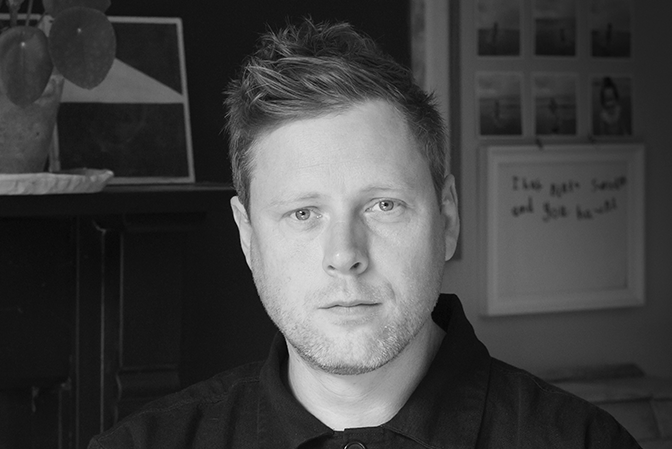
Max Porter is the multi-award winning author of four novels, Grief is the Thing with Feathers, Lanny, The Death of Francis Bacon, and Shy. His work has been translated into 36 languages. He is a frequent collaborator with theatre-makers, artists and musicians. His debut screenplay STEVE came out in 2025. He is an Associate Artist at the Southbank Centre.