
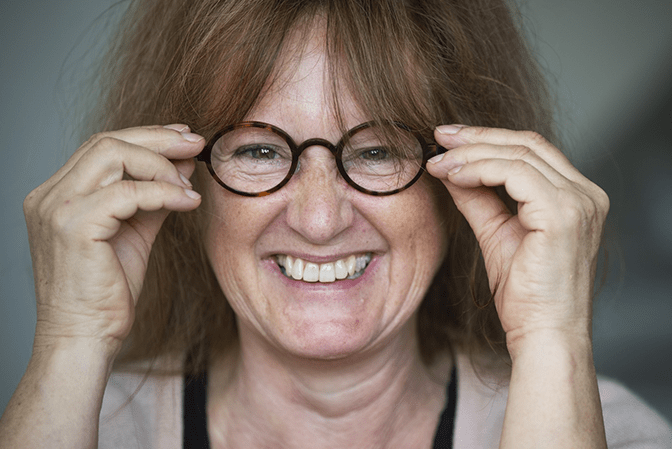
Solvej Balle on time, morality, and searching.
PEN Transmissions is English PEN’s magazine for international and translated voices. PEN’s members are the backbone of our work, helping us to support international literature, campaign for writers at risk, and advocate for the freedom to write and read. If you are able, please consider becoming an English PEN member and joining our community of over 1,000 readers and writers. Join now.
Solvej – thanks so much for speaking to me. I want to start by talking about isolation. Your first book, Lyrebird, is about being a sole survivor. At least for the first two books, On the Calculation of Volume is about being solitary. And I can’t help but mention that you live on an island with a population of 6,000. What draws you, as a writer, to isolation?
I have wondered a bit about this. And you’re right, there is something there. I think it’s about asking who we are as humans when we are without each other. Asking: Is there a core? What is it? What are we on our own? I was fascinated when I was young with Robinson Crusoe-type stories. I think I’m interested in what we are as singular beings, and how that relates to what we are as social beings.
Unless we’re twins we’re born into a singular life, but we are immediately totally dependent on others. I’ve never put it like this before but, actually, I think what I’m interested in are people’s singular timelines – the singular timeline we live as opposed to how our timelines cross. In On the Calculation of Volume, Tara and Thomas’s whole way of experiencing time is broken; the idea of experiencing a timeline as crossing with another one is broken.
One of the things I realised when I was writing the third book was that one of the things I’m least interested in is how people meet in a world where you position yourself against each other. I was interested in class, rage, age – but not in the way we observe each other as human beings with qualities. You won’t have read this yet, but in book four the characters reflect that another human being is ‘a gift’. That a human being is not someone to be afraid of. I wanted this world: I wanted a world in which human beings weren’t afraid of each other, and in which power relations would piss off.
I’m interested in what that world does for concepts of fear, self-orientation, morality. I’ll come back to that.
I’m also interested in how you describe relationships between the singular self and the social self. As I read the third book, and Tara started encountering others stuck in 18 November, I started conceptualising her as having three selves: before getting stuck, being stuck alone, and being stuck together. And I realised that she hadn’t thought about self 1 being different to self 2 until self 3 came along. It’s such a change. And what prompted that change? Why is it here, in book three, that these other characters walk in, at this moment in the story?
That’s a good question. I thought she was going to meet others earlier. But I decided that she had to understand her own situation better first. In ‘loop stories’ like these, typically there’s a main character who’s an arsehole who has to go through all these things to be a better person and then they can come out of their loop. But I felt that it wasn’t the act of getting out of the loop that was interesting. What was interesting to me was the idea of stripping off what you have around you, of being in the loop.
Tara strips off her life with Thomas in Clairon-sous-Bois; she tries to catch the seasons but loses that too; she loses the feeling that you can decide where you go; everything loses value; she loses her bag and all the bits of identity she was clinging too; she loses the power to do. Again, I haven’t really thought about it like this before, but I think she had to be stripped of all that, and have this kind of neutral human nakedness, before she could meet others.
I felt bereft and naked too when Tara lost her bag. It was one of the most devastating moments of book two, for me.
On that idea of losing ‘the power to do’ – and coming back to fear and self-orientation – I want to go to the latter part of book three, when we meet Olga and Ralf, and learn about Ralf’s obsession with preventing the accidents and harm and pain of 18 November, and working out how to do it every repeating day, for as many people as possible. That’s about trying to regain the power to do; for me, there’s also an interesting tension between an ostensible act of utilitarian selflessness and a deep self-centredness in trying to give one’s own day a lasting purpose, even when you’ll be stuck in it again and again.
Yeah. And a trust in the idea that you’ll make things better rather than ruin things even more. Are we eating up our world or can we avoid doing bad things? And can we actually do ‘good’ things when the good things are cancelled out the next day.
Yeah. And the books are full of all these test-cases for how certain moral or ethical or philosophical codes fall apart when stuck in a day. What does utilitarianism mean, anymore, when stuck in a repeating day? And so my question, to someone deeply interested and studied in philosophy, is: what did writing this book reveal to you about morality?
In the beginning I was just interested in questions of time. It was only quite late on that I became interested in questions of morality. I’ve never felt the duty to throw moral questions into my books, but these became books that started throwing moral questions out. You find the characters wrestling with them, and feel the need to listen to what they’re saying – to them trying to answer the moral and philosophical questions that grow out of the fabric of their world.
It’s naïve, but I didn’t think that the book would end up containing so many questions of that type. I thought of it as a love story. I thought of it as a story about time. But then you send Tara out into the garden to pull a leek out of the earth, and now you have to wrestle with the question – as she does – of whether she is eating her world. That is a question that grew from the fabric. And I think one of the reasons I could stay with this project was because the fabric contained so much philosophy: What is material? How do we treat the material around us? How do we treat beings around us?
That’s a part of why they are wonderful books. They are not a world built to study morality; they are a world built to be a world built.
Yeah. And one thing I hadn’t thought about when I built the world was that the conflict level between the people would be so low. Their conflicts aren’t internal. There’s room for questioning what is right and what is wrong because they aren’t going to demonstrate it against each other. They have disagreements, but they have them without conflict, in a way. Because if you can’t act, what’s the point in having conflict? Ralf can go out and collect information and make plans to save people, and there’s no point in enacting disagreement about that.
I’m going to stick with asking questions about big concepts for now. Your previous book, According to the Law, comprised four clear stories of searching – of obsessive searches. And for me there’s a constant sense of search in On the Calculation of Volume. The characters are constantly searching, and searching for different things: for themselves, for logic, for company, for time, for change, for love. I’m not going to ask you if the act of writing is an act of writing is an act of searching, because I think that’s a bit glib. But do you think the act of reading is an act of searching? (I hope that’s not glib.)
In According to the Law, the characters have such singular projects that they can’t let anyone else in. They’re one-way roads. If you were to try and imagine those four people meeting, it wouldn’t work. I think what ended up as According to the Law was probably my first attempt at writing On the Calculation of Volume – I’d already had the idea for it by then.
I think Tara is more open to interaction than the four people in According to the Law. She’s not linear in her search; she’s completely circular. In book four, there’s more searching, more attempts at meeting and interaction. And in book five they go all in, searching in whatever way they want – all types of search, all types of knowledge.
But the searching isn’t in the narrative. They don’t go on a narrative search, so to speak. How can I put it? Hmm. This is difficult to explain. I think the big question behind all this is knowledge. Are we searching for it? Or are we modelling and manipulating it? For instance, what we do to time when we tell a story; for instance, what we do to space when we are painting. We are modelling – but there’s an element of searching, because we wouldn’t want to be there if there weren’t an element of search. It’s not searching towards something, but searching around something.
Modelling is a lovely way to put it: modelling space, modelling time, modelling knowledge, and how that has to be an act ‘around’ rather than an act ‘towards’. One of the clever things the series does, by recapitulating itself into a repeated day, is refusing to be linear. There’s a wonderful moment when Tara, feeling at her most untethered, says ‘perhaps we are music after all’ and then, 19 days later, ‘But if we are music, it is unpredictable music, made up of improvisations and strange pitches and unexpected noises’ and then ‘My days are porous. I follow no pattern’ and then ‘Now and then I sit at the table by the window to write, but my language overflows. There is no healing to be found in sentences.’ I think that captures what you’re saying, maybe: we are operating through words, sounds, time, space, in some kind of search, but it isn’t towards a singularity, and feels much more out at sea.
That’s a very good way of putting it. It’s more being out at sea than moving along a road. Tara calls it a container. I think she sees time like that – something she can dip herself into every day.
But the older the characters get, the more they have to let time in more; they have to let in something linear, something progressive, something searched towards. She doesn’t really do that until book three, until she meets Henry, and they have their discussions about history, and what happens when you lose your future, and their disagreement about history and herstory.
That feels like then moment in which, from an act of disagreement about history and herstory, the act of dipping into the container becomes a more patterned and intentional thing.
OK, I’m going to stop with the conceptual and come into the text a bit more. I won’t ask too much about ‘craft’, because I know that can become wearisome. But I would like to ask a bit about the logic of the world of On the Calculation of Volume. Were there moments in which you found yourself tied up in knots in writing the logic? There are some lovely passages where Tara, but also Henry and Ralf and Olga, decide that it doesn’t really matter if we can’t work out the logic of, for instance, how long something has to stay under a pillow before it won’t disappear when the day restarts – and that’s a lovely act of reminding the reader that we mustn’t worry too much about the logic, mustn’t get bogged down in it. But did you get bogged down in it?
And another question about this: are there rules that govern the world that you know about, having created it, but that you didn’t write into the books, and that we as readers will therefore never know?
There were some elements I wanted from the very beginning – for instance, that Tara ages we go. And there were elements I had to understand – do things disappear if she uses them? But I knew I wanted to have a non-mechanical world; or, I didn’t want the machinery to creak. It’s that notion that the idea has to be dissolved in the work as sugar dissolves in a glass of water.
For me, there had to be something sensual in it, something which let the machinery grow into the fabric of the story. And I think that’s one of the reasons it has taken me so long to write it: I had it moving round in my head for such a long time. I felt the way that it worked more than I thought it out. And I had to follow the things that I wanted to be in the world, and see how that would solve other questions that emerged. I let Tara and Thomas explore the rules for me: the scene with the fried eggs, for instance, with the frying pan disappearing – that was my way of setting up the rules without setting up the rules. Letting them find out what the rules were. Or, what happens to all the rubbish? Would the bin be overflowing? I had to have a little exit: some things just disappear.
I always sent Tara out to explore, rather than setting the rules. So I feel like I’ve explored them more than made them.
Which is, I’d say, dissolving the sugar in the glass of water.
Yes, that was my way of doing it. And also there is something about the people and their conscience that bears on the world. For instance, Tara has a jumper that disappears after a long time – but also she didn’t really need it. They find that a used phone is easier to keep alive than a new one. And so there must be something human that is seeping into materials. I didn’t think of myself of having an animistic worldview, but I can see in my language that I must. I mean, I sometimes talk about materials as if they have agency. I have worldviews in this book that I don’t have in real life. Or maybe I do, and I don’t want to admit it. I don’t know.
Which is also an effect – or maybe a gift – of letting your characters out into a world you’ve built without governing those rules. Feeling and finding instead.
And actually this is typical me: I tried to refute your suggestion that there is a search, and now I have admitted it. Of course there is a search. Every time there is a problem with the loop, I let them go out and search for me.
Are you writing book six now, or are you about to start book seven?
About to start book seven.
Do you know how it ends?
Yeah.
Do you want to know?
No. Hmm – no.
Haha.
But I want to know if you knew it when you started writing book one.
The ending came with the idea; I haven’t thought about the end as separated from the idea. It was there long before I started writing. There are elements that have come along the way, of course. And let’s see if I’m right about the end. But I think it’s not so likely that it will be very different to what I think it will be. I’ve written several versions of the last pages.
I wanted to ask because we were talking again about searching. Because maybe knowing the end of a loop story at its start short-circuits that search, in some way – or lets you search not for the thing at the end, but the bits on the edge of the road.
A lot of funny bits at the edge of the road have grown into the story.
On things which ended up included versus things which ended up on the cutting-room floor (and this is my last craft question, I promise): the days are numbered, literally, throughout the series, and I want to ask if there are days that you wrote, but which you decided the reader doesn’t need to hear about? Say, as I randomly open the book, between day 1,445 and day 1,531, which appear together here on the page.
I don’t have whole days that I took out. But there are tonnes of elements and ideas that I took out, and tonnes that I didn’t think were going to be there which are. The bag theft wasn’t part of the original plan; that came when Tara came to Düsseldorf, and I realised it would happen.
Very early in the project, I wrote down all the numbered days in a grid. I printed out sheets of them – piles of them, with nothing written on the ‘empty’ days. I knew the feeling of the length of the story, in this way.
I think it’s important for Tara to have space to leave us out – she might experience things she doesn’t want to tell us about. Maybe she’s been much more panicked than she’s let on in day 121; maybe she’s doing things she wants to keep private. I’d like to leave that to her, in a way.
There are a few things that I’m not telling the reader till later on – but that’s because she doesn’t know them yet. She’s not holding those days as important because she doesn’t yet know to. So there’s a bit of cheating from all sides.
It seems like you and Tara have a very equitable relationship.
Haha – well I had to listen to her a lot. Partly because she’s a different generation to me. I had to give her a lot of space and try to pull my own personality out of her world. I even had to write a book about my own life and past, to give her some space. I was ready to really give On the Calculation of Volume a go – it was maybe 2006 or 2007 – and had written quite a bit. But I had to write this other book about my family history going back to 1690 in order to give Tara some space.
Something I then realised, later, was that my life started coming out in other characters instead of Tara.
I’ll keep with how different people come in and out of stories and their texts. Books one and two are by different translators to book three. Could you talk about working with Sophia Hersi Smith and Jennifer Russell, having worked with Barbara J. Haveland – what have those collaborations been like? What does the accumulation of voices mean in terms of what we’ve just been discussing? What have the moments of difference been?
It’s all been very interesting and very smooth. I’ve worked with Barbara for a long time – we knew each other from According to the Law, which she translated. But we hadn’t ever met, and didn’t until after she’d translated book one of On the Calculation of Volume. That was brilliant: Barbara was kind of more Tara Selter than I was. Of course, Tara has never written anything in Danish, which is also interesting in terms of translation. Barbara was ready to retire, but she agreed on giving it a go. She started the project during Covid, and so she’s said that she also felt there was something in it about her life at home at the time.
And then Sophia and Jennifer came in just at the moment that Tara meets other people – and starts to mimic Olga’s way of talking, absorbing some of her language. And these two younger translators come in at the same time Tara’s voice changes. It’s as if they fell from heaven somehow.
I’ve been so lucky to have translators who, you know, accept my weirdnesses. For instance, in English, you wouldn’t really say ‘there is no healing to be found in sentences’ – you’d say something like ‘there’s no healing in words’ – but I wanted ‘sentences’, and they were so willing to make that sort of thing work.
Sentences are very different to words – and that line stayed with me.
Well sentences have time in them in a way words don’t. And there’s something healing about time, for Tara. And everyone accepted that and said, OK, we’ll fight for your darlings, we won’t kill them.
I have very little interest in what’s lost in translation but great interest in what’s gained in translation. And that’s a good example.
What’s gained in translation is when you’re trying to get the two languages to breed something in some way, rather than cutting something from one or the other. There’s a tendency to normalise what’s weird – weird as it’s translated, or weird in the original language. And I think there should be freedom for the translators to bring something into the new language, to be willing to play.
Play is interesting. I often think of translations more as cousins to the original than siblings – and I suppose you have more fun with your cousins because they’re not your siblings.
That’s a good image.
Maybe translation is an act of trying to find a good metaphor for the act of translation and never finding the right one.
I also sometimes think that when you translate your language comes and messes up what you’re trying to say. So maybe language is the uncle that comes in and ruins everything, and translations are the cousins who then arrive and save the party.
I remember being an au pair in Paris when I was 17 and having this feeling that the new language – the other language – was the space of being incompetent. And then someone who could speak across the languages would save the situation, and show how this new language was your friend, not your enemy. And when my writing is translated I have that feeling: sometimes, a sentence arrives in translation and it’s so much better than the one you wrote originally.
I’ll keep asking other people I interview about which family members they associate with acts of translation.
As we were speaking before we started this interview, about your involvement with PEN in the 90s, and as we’ve spoken about both the idea and the writing of this series having developed over such a long period of time, I’ve been thinking about what reflections on the changes in European publishing your experience with this project can reveal. I’m thinking about the gap between your starting writing them and my reading them, about how these ideas that are enthralling readers now are the ideas of the past. Maybe there’s something about how sustaining a literary idea can be? Maybe there’s something about how the oscillations and vacillations and fascinations of publishing go in loops? Could you speak into that?
I think letting myself be in doubt for a long time without having to decide if the idea was right or wrong was necessary for the books. But I do think there were times in the last few decades where they wouldn’t have fit into the landscape, in some way. Or where they would have had to be a little different in order for me to feel right about them.
There’s been this increasing feeling of ease for me in the years leading up to publishing, of feeling more comfortable with putting it out into the world. It’s as if there’s something of the fabric that it fell out of in the 80s – my life in different part of Europe in the 80s – that works today. I mean we had a ‘no future’ generation in the 80s, the punk generation, etc., and I feel some of that means something today. An increasing awareness of climate crisis, an increasing awareness of people across the globe, an increasing questioning what Europe really is. So there are elements that are similar between the time the idea came and the time the book came – which I find rather fascinating.
But Tara Selter doesn’t fit into a generation. If I had to write Tara as her generation now, I’d be in trouble. If I had to write her as a millennial, I couldn’t. And so we had to let some years go.
So I feel more that there’s something repetitive in different periods of time than there is a continuity. I don’t feel like I had something lasting, but rather that something that was ready to harvest at certain times and not at others. There have been wrong times for the book. After the despair of the 80s, the feeling of the 90s and early 00s that everything was hunky-dory – which it wasn’t, and which I was rather angry about at the time – meant that wasn’t the right time.
And I don’t think the fabric of all those times created the fabric of the books. But they seeped in.
Gosh, this is difficult – it’s so difficult to try and explain something that has lasted 40 years.
That’s about the impossibility of that question – for which I’m very sorry – but also, I think, about the richness of how, simultaneously, the world inflects or inflicts on a 40-year project, yet that 40-year project is, and can exist, other than through those inflections and inflictions.
Yeah – and I mean you really have to find the right moment for it. In the end I didn’t worry that much about sending it out into the world because I didn’t really think anyone would read it. My biggest worry was whether I should print 500 copies or 600 copies. Maybe I never think of readers, in that respect – but more whether a book can be written in a given world. At one point I thought about putting the whole story back into the 80s, because it didn’t work in the 00s or 10s. But then it worked in the 20s, with its smartphones and the credit cards.
But I can’t explain why.
But thank god you can’t. I remember a writer saying to me that they couldn’t explain the ‘why’ of their novel – and thank god, because if they could they’d have written an essay rather than a novel.
Yes. And in an essay there wouldn’t be all these messy roads.
We’re back to searching and roads. And I’ll come to the end of the road with a final question: if you woke up tomorrow, and it was today, and you had this interview in your diary, how many times would you keep turning up before you abandoned it.
Oh wow. Hmm. Quite a few days – but I’d start interviewing you. I think you’d be bored before I was.
But then, would you know that it was happening? Would you be stuck in the loop too? Or would you be outside it?
You see you are interviewing me already. I’ll tell you what I’d rather be: I’d rather also be stuck in the day too. And maybe that’s a horrible, toxic takeaway I have from reading these books, but I’m in some way more distraught for the billions of characters not living in that loop than I am for the few who are. So, I think, in this question, I’d rather be waking up and finding we were both stuck doing this interview every day.
It would be fun, because if we both knew we were stuck then we’d start searching for others straightaway. Because then why would it just be us?
Yes, I think we’d be on our way to Düsseldorf now.
We’d keep this Zoom link, and put up posters with the link printed on it, and say that everyone else stuck in today should join us.
Interview by Will Forrester.
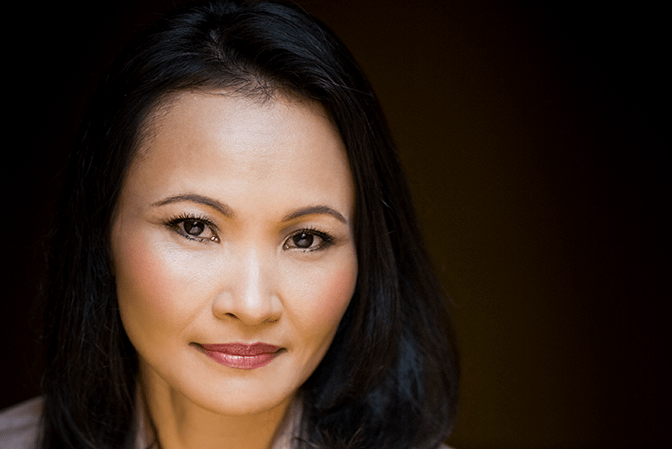
Solvej Balle was born in 1962 and made her debut in 1986 with Lyrefugl (Lyrebird). She went on to write one of the 1990s’ most acclaimed works of Danish literature, Ifølge loven (1993) (According to the Law: Four Accounts of Mankind, translated by Barbara Haveland.) On Calculation of Volume is Solvej Balle’s return to literary stardom after nearly 30 years.
Photo credit: Fredrik Sandberg
 PEN Transmissions