

Rana Haddad and Raphael Cormack on holy men, charlatans, and how ‘East’ and ‘West’ saw each other.
PEN Transmissions is English PEN’s magazine for international and translated voices. PEN’s members are the backbone of our work, helping us to support international literature, campaign for writers at risk, and advocate for the freedom to write and read. If you are able, please consider becoming an English PEN member and joining our community of over 1,000 readers and writers. Join now.
RANA HADDAD: How did you come up with the particular idea for your latest book, Holy Men of the Electro Magnetic Age – where you unravel the lives of two ‘Holy men/ Charlatans’ who began their journey in Istanbul and Jerusalem in the aftermath of the collapse of the Ottoman Empire and end up enchanting audiences in Paris and Beirut by using a mixture of half-fact, illusions and dreams of what could be? How did you hear about Dr Tahra Bey and Dr Dahesh, and why did you decide to build your book around them and themes of magic, science and spectacle?
RAPHAEL CORMACK: I have two answers to this question. The first one is the simple one. My first book, Midnight in Cairo, was a history of the 1920s and 1930s entertainment industry in Egypt’s capital. As I was doing research for that project, I reasonably frequently came across references to stage hypnotists and spiritualists who appeared on Cairo’s cabaret stages alongside some of the biggest musical stars of that era. I started to ask myself what they were doing on these bills and what audiences made of them. That soon led me towards Tahra Bey and Dr Dahesh but it also led me towards many others like them – Dr Salomon Bey the hypnotist, and other fakirs like Rahman Bey and Hamid Bey. It was a whole scene that has now been almost entirely forgotten.
The second answer is more complicated. I’ve spent a lot of time thinking about how we can see the 1920s and 1930s as global decades or, at the very least, write the Middle East into the standard histories of the period. That is something I was trying to do by writing about the entertainment scene in Egypt, which was globally connected. I saw an opportunity to do this with the occult too. If you read anything about the early twentieth century, it doesn’t take long before you come across some manifestation of the occult, whether it’s theosophy, spiritualism, hypnotism or another mysterious art. Not only was it very popular, it seems to me to capture something of the spirit of the age: irrationality, hope, post-traumatic anxiety, and curiosity. Again, I saw a chance here in the characters of people like Dr Dahesh to write the Middle East back into the story of the interwar period.
Neither of them were strictly speaking doctors, in the conventional sense of the word. But they used that title with all seriousness, and used spectacle and mysterious methods to convince a large section of their public that they had superpowers. Why do you feel that, 100 years ago, as you feel now, people in fear of drastic historical changes and the arrival of a new unpredictable era wanted strong men in politics and men who claimed supra-scientific or supernatural powers in private?
There is an uncomfortable connection between these holy men and the strongmen dictators of the period. When I started this book, I felt quite a lot of sympathy for the occult and I still do (to an extent). I was drawn to its desire to create a new world, its rejection of the corruptions of the material world, and also, to be totally honest, its fun and charismatic characters. But the more I researched the harder it was to ignore the links to various kinds of fascism. These links were rarely direct (neither Tahra Bey nor Dr Dahesh were fascists – nor were they really involved in any kind of politics at all). Still, the indirect connections were very strong. Not only were there similarities between the way that these holy men held their followers in their sway and the way that the strong men like Hitler and Mussolini inspired such devotion, but also the rejection of bourgeois rationalism and the appeal to a great new world coming were eerily alike. Something about the occult seems fundamentally non-egalitarian, despite its frequent claims to promote the equality of all humanity. As Anna Della Subin has said, talking about the same period, ‘occultism, the realm of hidden, elite mysteries, seemed to contradict the spirit of democracy.’ If one person or a small group of people can claim special access to the world beyond the veil, a hierarchy necessarily emerges. It’s only a few steps away from dictatorship.
Tahra Bey: an Armenian pretending to be an Egyptian Fakir in Paris and the maternal cousin of Charles Aznavour. Is this how a refugee one century ago found a way to fame and success in the West?
Tahra Bey’s Armenian-ness is clearly a key part of his story. For those who have not read the book, Tahra Bey came to Europe in the mid-1920s, claiming to be an ‘Egyptian fakir’ and performing various miraculous feats which baffled the scientific establishment. He could seemingly control his body with the power of his mind, changing his heart rate at will, piercing his flesh without feeling pain, and putting his body into a death-like state during which he would be buried alive in front of a live audience. All of these things astounded audiences, who were also were drawn by his exotic garb (flowing white robes and headdress) and his claims to be a fakir descended from a long line of fakirs. These stories, though, were all false. He was an Armenian from Istanbul, born Krikor Kalfayan.
As I was writing this book (and partly helped by the discussion after a talk I gave on the subject at the Moon Station in Athens) it became clearer and clearer to me that Tahra Bey’s identity as an Armenian refugee was crucial to understanding his persona. In Europe at the time Armenians faced both discrimination and suspicion. I interpret his construction of the mysterious Eastern persona as an attempt to style himself as an exotic and interesting outsider, rather than a suspect refugee as many Armenians in Europe were seen. Likewise, his whole act – his imperviousness to pain, his conquest of death – could pretty easily be read as a response to the traumas of the Armenian genocide. Although Tahra Bey himself does not seem to have personally witnessed violence, he would undoubtedly have heard stories and many of his relatives would have perished in the 1910s.
I think the period you chose is an extraordinary period of history, and I find it fascinating you chose to explore it through Dr Tahra Bey: ‘Tahra Bey born in Istanbul . . . travelled across Europe out of the ruins of the Eastern Mediterranean until he reached France as a refugee in 1925. In Paris, advertising himself as an “Egyptian fakir” from a long line of mystics, his ability to manipulate his physical body in inexplicable ways using the power of his mind made him a summer sensation. . . . Dressed in exotic Eastern robes and talking about a forgotten Eastern science of the spirit, Tahra Bey gave Europeans exactly what they wanted to hear.’
Do you feel that there was something that the East possessed which audiences in the West craved, and which Tahra Bey delivered for them in the character of a Fakir? What was it?
What we learn from Tahra Bey is that people in the West were obsessed with the idea that they could be saved by Eastern philosophies but that they really only wanted a simulacrum of the East not its reality. The craze for Eastern wisdom in the 1920s was not informed by true curiosity about the long traditions of mysticism from across Asia and North Africa. In fact, many people were often confused as to whether Tahra Bey was Egyptian, Indian, or something else entirely. The embrace of the East was largely just a rejection of the West. It was based on very little knowledge and so many people were fooled by anyone who came along dressed in long robes. A few people did eventually embrace the spiritual traditions of other cultures, including Sufism, and learn about them seriously. But these people were few and far between.
In the case of Dr Dahesh, your second subject, a Palestinian who moved to Beirut after the formation of Israel and used western science as a cloak and justification for his ‘magic’, soon becoming a celebrity in Beiruti high society, do you think that he is in a way a mirror image of Tahra Bey? Instead of dressing in Eastern robes, he wore western suits; instead of talking about Ancient powers and techniques, he claimed ‘Western Science’ as his source of extraordinary power.
Dr Dahesh is the centrepiece of the second part of the book and his story guides that narrative. I use his story to write the Middle East back into the history of the modern occult – not as an exotic, mystical fantasy, but as a real place with real people in it.
Dr Dahesh also fits into the narrative nicely because he first appeared on stage in 1929 doing an act that was clearly inspired by Tahra Bey and his fakirism. Dahesh would pierce his flesh without feeling pain and bury himself alive just as Tahra Bey had done in Paris. However, instead of dressing in long white robes and headdress like an exotic Rudolf Valentino-style Sheikh, he put on the garb of Western modernity. Soon he began to talk of hypnotism and spiritualism instead of fakirism, explaining that this new science could unlock many secrets. He was not the only one, either. Many hypnotist spiritualists were active at the same time, some more famous than Dr Dahesh and some less so.
Unlike these other hypnotist-spiritualists though, Dr Dahesh went on to form his own religious movement. People who were stunned by his miraculous abilities – ranging from materialising large objects out of thin air to reading their minds – were drawn to the complex metaphysical doctrines he espoused and were inspired by his calls to unite all religions under the banner of Daheshism.
One obvious interpretation of all of this would be the one you proposed: that in the ‘East’, ‘Western science’ was playing the same exotic role in the public imagination that Tahra Bey’s mysterious ‘Eastern’ doctrine of fakirism did in Europe; that they are mirror images of each other. There is much to be said for this interpretation, but I would add one more thing to it as well. As I show in my book, these hypnotists were really doing something extremely similar in form and content to the things that Jinn summoners were doing at the same time. In the early twentieth century, traditional practices using the power of the Jinn to access mysteries from the world beyond were still popular. However, they were considered backwards by many bourgeois modernisers in the region, because Jinn summoners were the subject of many high-profile legal cases in the 1930s, accused of charlatanry and fraud. Still, many people would go to them to find answers to their questions – who stole my money? where is my lost ring? should I travel abroad? who will I marry? and so on. Hypnotists – who put their mediums into trances and told audiences to ask them extremely similar questions – unlike Jinn summoners, claimed the power of modernity as well as its prestige.
The Middle East in the 1920s and 1930s was not experiencing the same fears of civilisational collapse as Europe, but it was going through something equally momentous. A combination of the fall of the Ottoman Empire and the increasing encroachment of European colonial powers in the region led to a period of uncertainty and instability. Many at the time looked to modern science, which seemed to be delivering all kinds of inexplicable wonders, to fashion a new almost magical existence.
Is interest in magic and the supernatural simply a misguided cure for feelings of fear? Or do you think that people do believe that our paradigms of knowledge are too narrow, making them open to a vision of the world that transcends scientific materialism? Do you whole-heartedly believe they were both full-on charlatans? Or do you think they were also in touch with realms of knowledge to which modern science does not have access?
This is a question that hangs heavily over this entire subject. But it is not an easy one to answer. I have a few different ways of thinking about it, and will lay out a few. Firstly, pretty much the entire history of the world makes it clear that humans are not satisfied with scientific materialism alone. Some people will always seek out the mystical, the spiritual and the sublime, no matter how irrational it may be. That seems to be a pretty ironclad fact of human nature. The question of whether the metaphysical plane is ‘real’ is harder to answer. In some ways, I like to look at mysticism and the occult as one language and scientific materialism as another. They are both ways of interpreting the world. In some cases, they will express the same thing with different words, and, in others, they will have words or phrases that don’t translate into the other language. To speak of a language as ‘true’ or ‘false’ or ‘real’ or ‘fake’ doesn’t seem right. Perhaps it is the same with the materialist and spiritual interpretations of the world.
Things become very difficult when you write a history book about the occult. History is a materialist language. To ask, for instance, whether Dr Dahesh truly accomplished miracles is not a historical question. To ask why people were attracted to his message and what he offered people, however, is a historical question. As is the question of why some people were so opposed to him. So, these are the things I have focused on.
In order to answer the other question, a new genre of writing is needed. I very briefly toyed with the idea of turning this book into a work of fiction but decided that it wouldn’t solve the problems. What we need is something between fiction and non-fiction that can leave the question of logical truth hanging suspended before us. I am not sure what that is.
Before Political Islam turned into a political and militant movement, first used by the West as a weapon against leftist movements in the Middle East during the cold war, and its transformation into a target after 9/11, did Islam have more of a mystical and/or romantic image in the West? Was the idea of the East being a hot bed of terrorism and religious extremism as wide-spread then as it is now – before the establishment of the state of Israel and before the rising of the oil-rich Gulf states?
The idea of the Arab world being a hotbed of extremism goes back to at least the late nineteenth century, though in those days they would have called it ‘fanaticism’. There is a good argument that this view of Islam and Muslims as particularly ‘fanatical’ or extremist was really solidified with the rise of colonialism in the Middle East (opponents to colonial rule were branded ‘fanatical’ or irrational). Today, ‘terrorism’ seems to be a political category rather than something rooted in objective fact – at least, I cannot think of any consistent definition of the term that seems to hold water and corresponds to how it is used.
At the same time there has long been a simultaneous view of the ‘East’ as mystical, exotic and mysterious. The two have gone hand in hand since at least the nineteenth century. The two can make sense together if you say that the West is committed to viewing the East as irrational and illogical; sometimes this takes the form of ‘fanaticism’ or ‘extremism’, sometimes of ‘exotic Eastern mysteries’, but the basic fundamentals are the same.
In fact, I think it’s no coincidence that at exactly the same time as Tahra Bey is becoming a star in Paris, the French colonies in North Africa are being threatened by the revolutionary president of the Republic of the Rif Abdel Krim. As I say in my book:
When a man in ‘Arab’ robes and a headdress appeared in the Parisian press, it was most often in the role of dangerous enemy of France. But Tahra Bey, a mysterious man from the desert in long white robes and with a dark beard, had not come to take their empire; he had come to save their souls. For some, no doubt, he was a conscious or unconscious salve for their colonial anxieties.
What are the illusions the East has about the West – what we could consider the opposite lens to Orientalism? A lens where the ‘other’ looks and sees what it wants to see? And apart from the wonders of modern scientific inventions, how do you feel the eastern view of the West has changed over the last century?
The question of views of the West in the Middle East through the twentieth century is an extremely complex one, over which debates have raged. There are questions of modernity, colonialism, capitalism, and religion lying behind them all. Obviously, too, Eastern views of the West cannot simply be a reverse of Orientalism because that concept is so tied into power as well as simply perception. As Edward Said notes, all cultures to some extent have stereotypical views about other cultures, but what marks Orientalism out as something different is the way that these views are turned into a discourse that implicitly justifies Western rule in the East.
Still, I hope that the characters in my book, particularly Dr Dahesh and the other hypnotists, provide one way to look at this multifaceted question. They demonstrate the growing fascination with the West in the early twentieth-century Arab world and they show how far it spread. But, just as Tahra Bey reveals the ignorance of many in Europe about the realities of the Middle East, so these hypnotists show how people were willing to believe extremely outlandish things if they were presented as miracles of Western science.
I love that you’ve chosen to cover popular culture and strange phenomena in the region such as charlatans and fakirs. Your first book was about women in Cairo’s 1930s nightlife scene, while this book is about two unusual men who have pursued careers as magicians, seers or charlatans. Your interest in the world of entertainment and magic is a great way to show a side of the Middle East to which western readers don’t often have access. Do you feel that you saw a gap in the narratives about the Middle East, and realised while living in Cairo that you wanted to shed a light on that?
My aim has really always been to show the fun parts of Middle Eastern history, in particular popular culture and entertainment. To be honest, this is not primarily out of a desire to change the minds of Western readers about the Middle East, but because those are the stories that interest me. I am drawn to counter-cultures, the demi-monde and the kind of people who do not usually feature in ‘serious’ history. I like to read books about that kind of thing, and I like to write them too. If you’d asked me five years ago, when I started writing this book, I might have said that it might also change some stereotypes about the Middle East and show a different side to the Arab world than pictures in the news. Now, though, I am not sure I feel that way. After the Israeli onslaught in Gaza and the constant dehumanisation of Palestinians there, as well as the total lack of interest shown in the war in Sudan, I don’t really think my books are going to change the minds of people who don’t see Arabs fully as people. I’m not currently optimistic about the power of literature or writing to change minds. The primary audience of my books is (and probably always has been) people in the Arab world, people from the Arab world, or people who know the Arab world.
I have, though, been thinking a lot about comparisons with my previous book, Midnight in Cairo, which focused on female performers as opposed to the holy men of this book. In a lot of ways, the way that male occult performers of the 1920s and 1930s are perceived in polite society is not too dissimilar to the way that the dancers and nightclub singers were seen. In the Middle East, as in Europe, they were often seen as a dangerous threat to society and the nation. Both hypnotise and deceive their viewers, taking their money and leaving them bereft at the end. Of course, the comparisons are not direct. But they open up interesting avenues of inquiry!
Talk to me about the parallels you see between the era you explore – the turn of the twentieth century – and our current turn of the century: the rise of fascism, the proliferation of magical thinking and the business of delusion in the wake of the collapse of another empire and the birth of a new century.
I also see these parallels to our current age and find them quite difficult to interpret. One of the core arguments of my book is that the occult makes up the avant-garde of the collective psyche. If you are looking to find the anxieties, fears, hopes, or dreams of an age, then the best place to look is with the gurus, holy men, and occultists. In 1920s Europe, people were disenchanted with Western civilisation and were searching for a whole new way to see the world. In the Middle East, they were fascinated by the potentials of modernity, but were worried about its connection to imperial powers whose reach was stretching across the region. Today, in the wellness gurus and the new-age movements of the day which appear to be the analogues of the occult movements of the 1920s and 1930, we see the same thing happening. In my interpretation (though others may have different views) what these groups promise is a way to cope with the anxiety of the world that feels as if it is about to fall apart. I don’t feel we are in a world that has collapsed, but rather one that’s tottering. People are trying to hold fast to what exists, and there are all kinds of people who are trying to convince you that if you buy this product, if you do this course, if you meditate the right way, then everything will be alright. But it won’t.
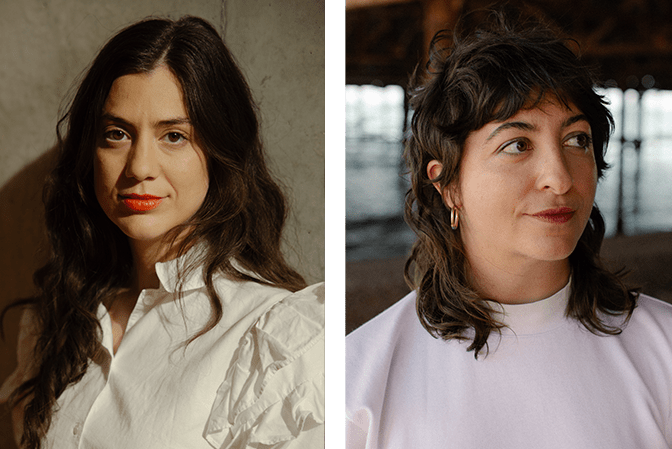
Raphael Cormack is Assistant Professor of Arabic at Durham University. He is a writer, editor, and translator from Arabic. His first book, Midnight in Cairo, was about the female stars of Egypt’s early 20th century nightclub scene. Holy Men of the Electromagnetic Age is his second book.
Rana Haddad is a novelist, writer and former BBC journalist. She moved to the UK from Syria as a teenager and now lives between London and Athens. Her first novel The Unexpected Love Objects of Dunya Noor was published in 2018 by the American University in Cairo’s Hoopoe Fiction. She’s currently writing her second novel featuring an inventor, a poet and a thief set in London before the turn of the 21st Century She’s the founder of the arts, design and writers salon Moon Station Athens.



 PEN Transmissions