
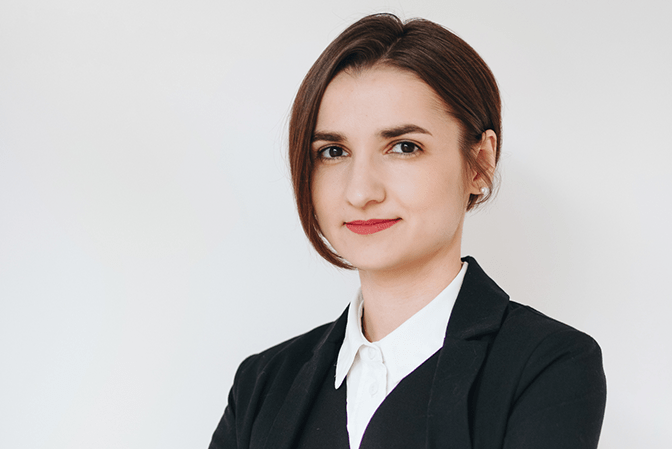
Tetyana Teren on time in London with Victoria Amelina. Translated by Larissa Babij.
PEN Transmissions is English PEN’s magazine for international and translated voices. PEN’s members are the backbone of our work, helping us to support international literature, campaign for writers at risk, and advocate for the freedom to write and read. If you are able, please consider becoming an English PEN member and joining our community of over 1,000 readers and writers. Join now.
In January 2024, Tetyana Teren, the Executive Director of PEN Ukraine, undertook a residency with English PEN in London, supported by Goethe-Institut London and Hawthornden Foundation. In April 2023, Teren and Victoria Amelina joined English PEN in London for events at London Book Fair and the British Library. In July 2023, Victoria Amelina died from injuries sustained in a Russian missile attack on a restaurant in Kramatorsk, Ukraine. This piece was written during Teren’s residency in January 2024. It was first published in Ukrainian in Posestry in January 2025.
~
Look, I’ve got a little bottle of champagne and a packet of biscuits from Polish Airlines. Nothing has changed since last year. Springtime London is the same – alternately sunny and overcast. The grey carpeting on the floor is the same, so are the four doors leading to hotel rooms and the fifth leading to the stairwell. One door is marked with my name, as it was then, but there is a different name next to yours. I took it down straight away and could sense you winking conspiratorially at these shenanigans. Champagne usually makes me tipsy rather quickly; this time its bubbles go straight to my head, relieving the stress of the long journey and this return to a place where everything looks exactly the same and where nothing will ever be the same.
You pour champagne into the glasses that were standing by the mirror in the bathroom, where I would have put my toothpaste and brush. You were unpacking, toothbrush and toiletries still deep in your bags, when I arrived. You’d just begun hanging up the dresses you brought. ‘They’re all black or navy,’ I remark, ‘of course.’ You once told me that at some point you decided to wear only black or dark clothes until the war ends. ‘But I’m not completely hopeless,’ you reply in your typical manner while reaching into the closet for a white spring shawl. Hanging among the long, dark dresses, it bears an uncanny resemblance to your long blond hair, which always stands out against your clothes. ‘Yeah, sure, that white shawl will change everything,’ I tease. To prove me wrong, you take off your black travel clothes so that you can model a new dress with the white shawl. Watching you from behind, I observe your milky white body, with pronounced ribs and shoulder blades, in black lace underwear, noting the sharp contrast with your light hair and untanned skin. ‘You know, my friend was in an accident once,’ you begin, fastening little buttons all the way up to your chin. ‘When I got to the hospital, she was lying unconscious and I saw her on the stretcher in a black bra and red panties. It suddenly hit me: you never know what will happen to you – or when – and what somebody might think when they see you unconscious in intensive care. So now, as a matter of principle, I always wear matching underwear.’ I admire your white shawl and take a video of you twirling around and stealing glances at the large mirror on the wall.
‘Look, it’s my first smile line,’ I say as we stare at our faces reflected in the mirror. You assure me there is nothing to be seen. Since last year it’s grown more pronounced. I study it every morning and contemplate how my skin will acquire new wrinkles and folds while yours will remain eternally milky and flawless, just like in those photos published by the international media on the day when everything happened. Though, in all honesty, you were never terribly concerned with such ‘girly’ things.
Remember that time when I wrote to you – in a different city, in a different life – saying that I desperately needed a pick-me-up, and we went to check out a clothing store I had discovered that morning on Instagram? I grabbed a heap of blouses, skirts and trousers for the fitting room, and you sat down on a nearby chair, saying your job was to appreciate and document the fashion show. Twirling before the mirror and your gaze, I realise that I already have plenty of clothes, but it’s so nice to be here together, trying on every possible thing. I’ll buy one more white blouse that I don’t really need, but right now I look fabulous and it will remind me of our day. This is an important feminine ritual: picking out and trying on different versions of ourselves. We may ultimately end up with yet another black dress or white blouse, but what matters in this moment is believing that you are taking a decisive step toward discovering a new you. As I went off to pay for the new version of me-in-a-white-blouse, you returned to the clothes racks and then came to the till with two black dresses and a long, orange lacquered skirt. ‘Don’t think that I’m completely hopeless,’ you said, as usual, and promised to wear it on some particularly special occasion. I never did see you wearing it, but that’s beside the point: you were always ready for change, even without a trip to the fitting room.
By this point we’ve each had two glasses of champagne and put on my red MAC lipstick. I need to unpack and get some sleep after two days on the road, and you have a date with your husband – it’s your first time in London together. But here I am sitting on the floor of your room, drinking champagne and nibbling dry biscuits, thinking about this habit of ours – sitting huddled together on the floor, whispering and giggling between sips of alcohol, our bodies emitting sparks. It goes back to the beginning of the full-scale invasion, when we would spend days and evenings in the corridor, sitting on our sleeping bags, waiting for the air-raid alarm to end, sharing a bottle that you had stashed away somewhere. We like sitting on the floor because it provides support; if it’s behind two thick walls, then we even feel safe. Red lipstick is a must: it reminds us that we are alive, you used to say. You reach out to hug me and then slip out the door – adorned in your white shawl and red lipstick – and head down the stairs.
The next morning I knock on your door and announce that today is Easter and that we should go to church. Dressed in a short black T-shirt, you look dishevelled. But I know you weren’t sleeping. You were writing, going through your notes and documents until late, and then you couldn’t get to sleep; in the morning, back to work. You say you’re not the church-going type and urge me to go without you, but I insist that I need to spend this holiday with people – that’s just how I was raised. And we shouldn’t dally in getting to church; today we should rise early, overcoming the desire to stay in bed, as our small sacrifice. ‘I could do with a bit less sacrifice,’ you say, ‘but that won’t happen in our generation.’ And you head off to shower and iron one of your black dresses. We haven’t baked traditional paska or made brightly coloured Easter eggs, but I did dash out to the 24-hour supermarket last night to buy a big muffin to serve as our Easter bread.
There’s a Catholic church nearby, with very few people at the morning mass, and I miss the jubilant refrain of the traditional hymn: ‘Christ is risen from the dead, trampling death by death!’ Still, I try to recreate the mandatory Easter morning joy. The spring sunlight pours into the nave with its high vaulted ceiling and organ music floods each of my cells, uniting me with the others here. You and I came here together and I’m holding a muffin that’s already crumbling and bears no resemblance to a traditional paska, but I’m glad that it’s performing this important role today. You remind me in a whisper that church is not your thing and suggest we finally go find some coffee. From high above, near the source of the organ music, the priest concludes the service with ‘Our Father, who art in heaven’ and then asks everyone to join in praying for those countries currently experiencing war or conflict. He begins reading their names – some are familiar, others that aren’t yet – and suddenly you grab my hand. I get it: we both fear that he will not utter the name of our country, this bird whose left leg is in peril; that he will forget it while trying not to stumble over all those other places in his list that are also rife with pain and death. We fear he will not notice us – two Ukrainian women who came to a Catholic church on Orthodox Easter for a morsel of hope, as crumbly as a muffin from the supermarket. When the voice from above finally says, ‘And especially please pray for people in Ukraine,’ we can’t hold back our tears. We are moved by how right, how just it is that even God on high, along with the priest and the organ, and grieving Mary, and Jesus who rose from the dead, all still remember us today.
‘What are you going to do after the war ends?’ I’ve managed to tear you away from your work again and entice you into another transgression. We are going to stroll around Hyde Park, soaking up the first sun of the season like ordinary people on an ordinary Sunday in April. We’ve brought chardonnay from the hotel fridge, secured in London Library tumbler cups, and we buy cheap sushi from a kiosk and go to watch the stately, domesticated swans float leisurely towards the shore. A moment later they turn back, scared off by the boisterous dogs and children enjoying their first outing of the year unencumbered by puffy snowsuits. There’s a chill coming from the water, so we wrap ourselves in one big cashmere shawl. This pretty picture with swans, dogs, and kids – especially the kids – stirs up a feeling that is always close at hand: the sense of two parallel realities that never meet. And as we stare into the pool, sunlight glinting off the cold water, I ask, ‘What are you going to do after the war ends?’ I don’t have to explain this abrupt shift from enjoying our sushi and the kids and the swans. You say, ‘I don’t know.’ You used to know – at the beginning. You were sure the end was near, and that everything would return to the way it was before. All the things you loved. All the things that mattered. Like taking your son for a walk around the lake to see the swans. But as the distance between ‘before’ and ‘after’ keeps growing – and the connection between them grows more tenuous – you can hardly remember what it was like before, you’ve lost touch with it; after all, you’ve lost so much. ‘Now I think,’ you start, ‘that we will be this way forever – cracked and crumbling. I can’t imagine future celebrations. I see us crying and hugging each other tightly – whoever of us is still here. And I see us working to preserve our memories, so that we don’t forget what happened, and learning to see past the holes in our buildings and ourselves, like the ones in the walls of the Victoria and Albert Museum that we passed today.’
On our way out of the park, I take you to a sculpture of a swan. Its base is surrounded by steel plaques that people have engraved with the names of their deceased loved ones and some final words or wishes. Most of them speak of everlasting love or seek forgiveness or name the heartbroken family members or express gratitude for ‘being by my side through sunshine and rain’. You say this is a wonderful tradition and urge me to take note of it: ‘We will need lots of ideas and spaces to commemorate every name.’
‘When I was a child,’ I say, after hearing your thoughts about life after the war is over, ‘I dreamt of having a special flying carpet that could hold everyone that I love. As long as they were on that flying carpet, nothing could ever happen to them. No burning sun or devastating floods. No war, no death. You know, I still think about this flying carpet and all the people I want it to carry, who will live forever. For ever and ever. Amen.’
On our last day in London, I leave before you. I know that you stayed up late again, working, but that you took something to help you fall asleep. The walls between our hotel rooms are thin, and I try not to make any loud noises that might wake you. Checking the fridge, I find one small bottle of champagne and half of our Easter muffin. I leave them beside your door on the way to the lift and slip a note into the name holder: ‘Love & hugs, sweet Bird’.
I’ve just put a note with the same message next to your closed door. The champagne has washed over me, leaving glimmers of warmth and sorrow. I shake off the tears and biscuit crumbs, which cling like grains of sand to my fingers and red lips.
London, January 2024.
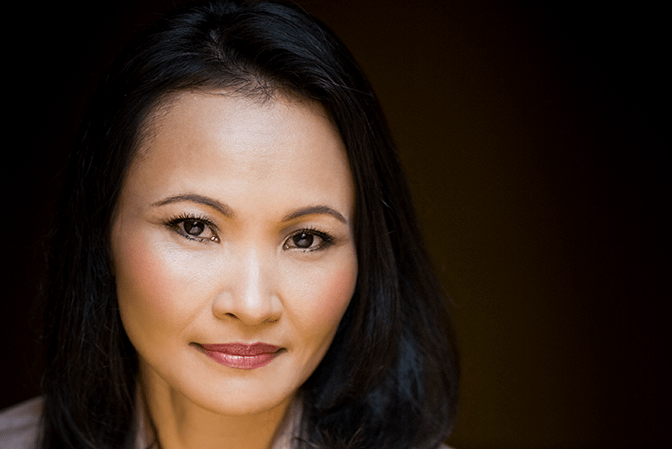
Tetyana Teren is a Ukrainian journalist, cultural manager, and executive director of PEN Ukraine. She has worked as a TV presenter, editor, and journalist for many Ukrainian media platforms. She has cooperated, as a curator, with Ukrainian cultural institutions and festivals, and she is the author of five books of interviews with Ukrainian writers and artists. In 2017–2018, she was the head of the Ukrainian Book Institute.
Larissa Babij is a Ukrainian-American writer, translator, and dancer based in Kyiv, Ukraine, since 2005. She holds a BA from Barnard College, Columbia University and an MA in Cultural Studies from the National University ‘Kyiv-Mohyla Academy’ in Ukraine. She is also a practitioner of the Feldenkrais Method of somatic education. Her writing has appeared in the Evergreen Review, Arrowsmith Journal, the Odessa Review, Springerin, and other publications. Her book A Kind of Refugee, based on her dispatches from wartime Ukraine on Substack, was published by ibidem Press in 2024.
 PEN Transmissions