
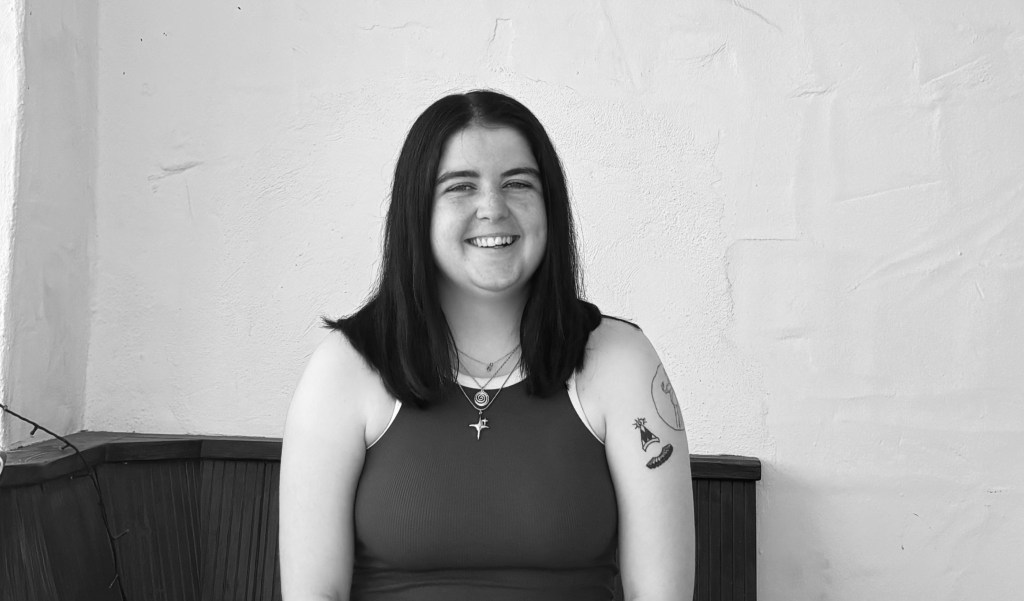
Jade Prince on writing Gen Z authentically for the screen.
PEN Transmissions is English PEN’s magazine for international and translated voices. PEN’s members are the backbone of our work, helping us to support international literature, campaign for writers at risk, and advocate for the freedom to write and read. If you are able, please consider becoming an English PEN member and joining our community of over 1,000 readers and writers. Join now.
This piece is in partnership with The Writing Squad, an organisation that exists to create and support the next generation of writers in the north of England. It is part of a year-long series, supported by the Norman Trust, showcasing Gen Z writers and writing. Read our editorial on the series here.
~
TW: mentions of sexual assault and abuse
I’m sat in a pub with a few girlfriends. The second season of Sex Education has just dropped, and we’re engrossed in deep discussion. Conversation eventually rolls around to ‘the bus scene,’ where a character is assaulted on a bus and struggles to cope. After an exchange in which many of the show’s characters divulge their own experiences of sexual assault and harassment, they band together to ride the bus with their friend in a moving show of solidarity. As we chat, we express how much it means to see such a freeing depiction of the many shapes sexual assault can take. There is a palpable sense of the unsaid. Though we keep our histories to ourselves, there is an unspoken awareness that this scene breaches the personal for nearly all of us. We don’t need to have our own therapy session like the characters in the show; the scene has done it for us. We instead all express our connection through the same sentiment: ‘I just wish I’d seen this when I was younger.’
This is not the first time we’ve used this sentence, nor the first time I’d expressed it myself. I’ve had countless conversations in which people have said that a recent film or show has offered an insight they wish they’d had access to before: learning how to heal from heartbreak, the importance of strong female friendships, that other men also cry. Despite our world spilling over with easily obtainable information, my generation often find ourselves turning to the screen to locate feelings beyond the search engine. What is presented as entertainment now also functions as education. As the industry begins its long-overdue – albeit slow – catch up with representation, people are beginning to see their personalities, their experiences, their feelings explored in front of them. TV and film allow for a level of introspection that many find even if they aren’t necessarily looking for it to begin with.
This is the core of why many writers, including myself, are drawn to writing. The capability to stir a viewer or reader’s emotions is one of the greatest joys that being a writer offers. Admittedly, the current landscape of TV does make scriptwriting feel like a strange sort of calling. I elected to write my own show after acknowledging how empty the world of script still is, despite my enthusiasm for the form’s education–entertainment fusion. Often, I begin pitching my script to people I know by asking them to name the most recent show that authentically explores the experience of living in your 20s. Most say Friends, and I remind them that the characters are all in their late 30s by the end. Others might bring up the 2012 show Girls (an excellent show, but overwhelmingly American) or New Girl from 2011 (again, drastically American and more rooted in comedic depiction than reality). Better, more recent examples occasionally given are Michaela Coel’s Chewing Gum or book adaptations like Everything I Know About Love. The prompt often sparks shock and laughter as people realise they are only able to identify one or two shows. An almost identical conversation always follows, in which everyone praises this era as the most exciting, most confusing, and, often, most defining time of one’s life. Why, then, it is posed to me, is there such a writerly chasm? Whilst I don’t necessarily have an answer, I do have a drive to begin bridging the gap. It’s overwhelmingly compelling as a young writer to be able to fill this space, particularly given how rare the opportunity is to write into such expansive literary real estate.
People critical of my generation often focus on how we have grown up with the rise of social media and fast technology. They speak about the impact it’s had on our brains, attention spans, and senses of self. I like to note that impending climate devastation, political turmoil, regressions in attitudes towards minority communities, and a general and overwhelming lack of stability in our futures have also done a considerable number on our development. And yet none of these pressures are uniquely new. In this lies the strange beauty of writing a coming-of-age story. I can explore patterns of behaviour that are undoubtedly products of the contemporary era. I create characters that mirror my girlfriends and their alarming tethers to dating apps, constantly aligning their sense of self with the rate of their matches. I watch them grimace at the perverted remarks they receive, then listen and nod later when we’re a couple glasses deep and admitting that it secretly makes them feel desired. I also write characters like those mates always down for a good time and a few too many, whose dependency on comedy and drugs masks a deep bile of self-hatred, uncertainty, insecurity. I write about girls internally feuding over their bisexuality, wondering if their interest in men is more a product of the world’s pervading preference for heterosexuality, struggling with the ways their orientation often puts them on the isolating outskirts of many queer circles. These experiences – these types of people and their personalities – are not as specific to the contemporary era. To write them into life alongside the modern moments provides a chance for both writer and viewer to acknowledge the comfort and residing strength in the strange humanity of your own struggles and difficulties.
It is this catharsis that primarily fuels my writerly drive. While all of the experiences I’ve discussed are from those around me, I also write to examine and work through my own feelings and moments. I wish I could say I’m removed from that old cliché to ‘write what you know,’ but it’s an unnervingly deep part of my writing process. The show lets me use characters to work vicariously through my own difficulties; the strain of living life after heavy abuse, the almighty task of trying to successfully participate in the expected vivaciousness and spontaneity of my 20s while also dealing with long-term PTSD. I think of myself at 16, back when phrases like ‘gaslighting’ and ‘guilt-tripping’ weren’t mainstream, when I had never seen any media that addressed assault, abuse, or rape. To have seen a show like mine would have completely revolutionised my understanding of my experiences, helping me to recognise what was happening and possibly begin vocalising what I had endured. I then think to myself at 19, in that pub with my girlfriends talking about sexual assault on screen. Though I didn’t directly discuss my own encounters, it was the beginning of understanding how freeing it can feel to talk about such moments and everything that comes with them. Now I sit here at 23, writing an essay in which I softly discuss my past and the project through which I aim to empower both my own voice and the voices of others. There’s always a relative responsibility as a writer that forces us to recognise just how far-reaching and impactful the act of writing can be. We have the capability not just to acknowledge gaps in content, but to fill them with sensitive, thoughtful, interesting work. I look forward to when I once again get to look back, sometime in the next few years. Hopefully, I will have begun to make my mark, educating and entertaining people on the experiences and feelings of my generation. Perhaps even more hopefully, I aim for the day that generations after us won’t have to repeat that phrase the girls and I once shared round that pub table, for they will have seen it all.
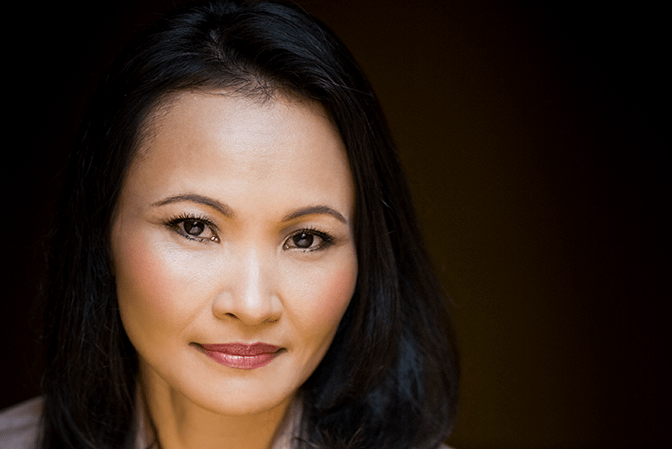
Jade Prince hails from Essex, England. She was a runner up for the Alison Morland Prize 2020, had work published in Ink, Sweat & Tears, Poetry & Audience, and Sunday Mornings at the River amongst others, and currently holds a place with The Writing Squad. She has a BA in English Literature with Creative Writing and a MA in Postcolonial Literary and Cultural Studies from University of Leeds. She currently spends her time writing a coming-of-age TV show and working for the NHS.
Photo credit: Jade Prince
 PEN Transmissions