
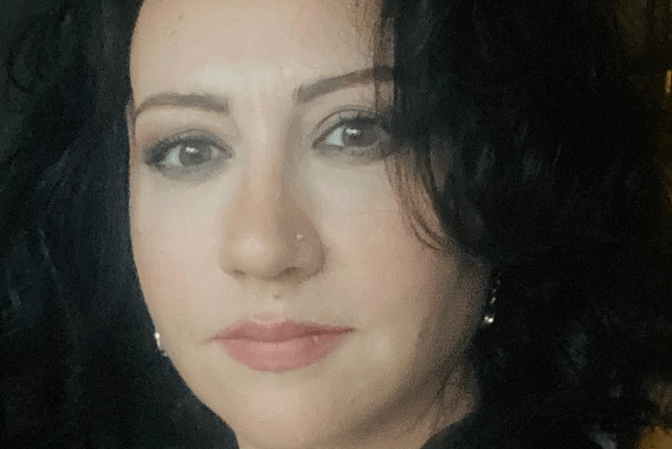
Syrian writer Rosa Yassin Hassan on exile. Translated by Nawara Mahfoud.
PEN Transmissions is English PEN’s magazine for international and translated voices. PEN’s members are the backbone of our work, helping us to support international literature, campaign for writers at risk, and advocate for the freedom to write and read. If you are able, please consider becoming an English PEN member and joining our community of over 1,000 readers and writers. Join now.
Have we really survived? – October 2015
This question has always preoccupied my mind and remains more pressing than all other questions. They describe us as ‘survivors’ from oppression, tyranny, war and destruction, torture, drowning, hunger, scorching heat and extreme cold. But have we really survived? How do you define survival in the first place? Is it the mere fact of physically enduring, remaining alive as creatures that breathe and function biologically? Surely, if that is the case, the term to describe us should be ‘remained alive’ and not ‘survivors’.
Time passes in exile, but in exile the passage of time is different than in other places. It is almost as if it has a different formula, one that makes the hours unbearable and lingering, so that you feel that your entrapment in the maze of exile is endless, while simultaneously making you feel that your years have slipped away, passed you by while smiling and mocking you and your life.
Time in exile is not one block that either passes heavily or speeds by in a consistent manner. It does not allow you to adapt to it. No, time in exile is separate and, at times, contradictory blocks, each block with their own mood and rhythm that might contradict your wishes and desires. Place is also different in exile from how you once understood it – the ‘here’ and the ‘there’. My body is ‘here’ while my soul remains ‘there’. Physics is here, chemistry there. Sometimes you say ‘here’ to refer to ‘there’. Other times you may say ‘there’ while talking about ‘here’. An exceptionally vague dialectic, an interchangeable relation in which the two places end up intertwined to form a special maze that only exacerbates your maze of time and renders you unable to define your time or your place – welcome to exile!
So, as time passes in exile, you discover that those who died are the survivors and that we did not survive. A truth that contradicts everything you have heard all your life! But there’s a problem: though you have not survived, survivor guilt is consuming your heart; it is like paying for a sandwich to have it stolen from you before you’ve even had a bite. A guilt that makes your entire life in exile become dedicated to compensating for that guilt: I have stayed alive while many others perished! That thought will look you in the eye every morning when you look in a mirror. You will remind yourself then of that line the old man told Deigo in one of your favourite movies, Twice Born, as he suffers with survivor guilt after escaping the war: ‘It was easier to run to the grenades than walking on ruins’. ‘No! You are wrong!’ you would answer him. But then you would end by repeating his final words: ‘I am ashamed to belong to the human race. God will not forgive us!’
Later, when you walk into your kitchen, you will spot the paper with part of Apollinaire’s poem written on it, which was made into a song by Leo Ferre:
Under Mirabeau bridge flows the Seine And our loves Must it remind me Joy has always come after pain
Under Mirabeau bridge flows the Seine And our loves Must it remind me Joy has always come after pain
Let come the night, let ring the hours Days go by, I remain
Love goes away like this flowing water Love goes away How slow life is And how violent Hope is
Let come the night, let ring the hours Days go by, I remain
Days pass, and weeks pass Neither passed time Nor loves come back Under Mirabeau bridge flows the Seine
~
Can I call it the era of silence? – April 2016
You woke up one morning back in the early days of your exile. You felt lonely, and a new convection made it impossible for you to be able even to lift yourself out of bed: It was all in vain!
Nothing is important anymore, and all that once was has now collapsed into a bottomless abyss! Everything we dreamt of, everything we fought for, for which many of us lost our lives. Now our country lies in ruins, our bodies piling in the graveyard the Mediterranean has become, and many of us are scattered in countries of exile, some friendly and some hostile. Many remain stuck in the death camps, besieged by hatred. We are the plague of this new world, mere nobodies living in places that do not know us, no-ones living in times that betrayed us. Believe me, my friend, many of these haunting thoughts will race through your mind. They will even stick their tongue out, mocking you.
I have lost my ability to take action; our ability has been squandered, just like everything we ever lived for!
Many of us have found ourselves stuck in such a morning and not been able to overcome it till the moment of our suicide. Suicide, here, is not merely a physical action – not at all! Sometimes we commit suicide while we stay alive. Silence is the answer in such a case; in such a morning, silence is the cleverest solution possible.
Silence, on many occasions, is the most eloquent response possible.
Do you remember the quote from Judith Butler that we debated for a long time? ‘Nietzsche did well to understand that I begin my story of myself only in the face of a “you” who asks me to give an account. Only in the face of such a query or attribution from another – “Was it you?” – do any of us start to narrate ourselves, or find that, for urgent reasons, we must become self-narrating beings’
In exile, you will face this question on a daily basis: Who are you? And this very same question is the mirror, and the gentler version, of the description that would become synonymous to you: a nobody! But that is why, in reaction to this very point, I decided to adopt Butler’s response to this dilemma: I have the right to remain silent in the face of such a question! ‘The silence articulates a resistance to the question: “You have no right to ask such a question”, or “I will not dignify this allegation with a response” […] Silence in these instances either calls into question the legitimacy of the authority invoked by the question and the questioner or attempts to circumscribe a domain of autonomy that cannot or should not be intruded upon by the questioner’.
Okay then, this ‘domain of autonomy’ is the space in which we should contemplate the past events: Were we wrong? Was there a possibility for things to turn out differently? What shall we do in the future? And many, many more questions that you have asked yourself, and that I have asked myself, and that have remained without answers and might remain so in the future. Others have been asking themselves these questions for over a hundred years; yes, the French Paul Valery stood at the end of the First World War with his thick moustache and warned: ‘And yet the facts are clear and pitiless: thousands of young writers and young artists have died; the illusion of European culture has been lost, and knowledge has been proved impotent to save anything whatever; science is mortally wounded in its moral ambitions and, as it were, put to shame by the cruelty of its applications’.
Yes, that was true back then. But what about today? Well, nothing has changed; the shame has only became more shameful.
And so, faced with this existential moment and all these feelings of shame, absurdity, guilt, and lack of confidence, solitude becomes the only solution for this simultaneously private and public crisis of yours, the only possible choice that can help you reassess and search for answers. Solitude is a very dark place, and its darkness will allow you to see clearly, for light blinds the vision. Only then will you praise solitude as Paul Auster once did, where ‘solitude’ does not mean ‘lonely’, but rather indicates keeping to oneself, so that we do not have to see ourselves in the eyes of others, for what will we see if we were to watch ourselves in their eyes?
When two of the most fundamental factors of your self-perception in life are compromised – the homeland and the identity – and, as this duality once governed your life, you now do not belong to the ‘old’ homeland nor to the ‘new’ one, you are stuck in purgatory, a punished soul that doesn’t inhabit the earth anymore, nor can it reach the heavens.
Thus your most profound convictions are shaken, and nationality becomes intertwined with exile. Nationality is the affirmation of belonging to a place, its people and culture. The interaction between nationality and exile becomes similar to the dialectic between the slave and enslaver as defined by Hegel, where two opposites redefine, dictate, and reshape each other.
Solitude becomes a manifesto of the defeated in their attempt to overcome their defeat.
~
We and the other / the other and we – August 2021
Is it our ‘activated’ identities that lead us to fall into the trap of ‘otherness’? Maybe!
One of the many meanings of exile that we contemplated in our earlier discussions is that exile leads us continuously to scrutinise ourselves and our values in relation to the ‘other’, and to question to what extent we are truly democratic.
You said that we came from dictatorships who want everyone to accept that there is one political outlook – or else! From patriarchal, unilateral societies who want everyone to accept that there is only one acceptable social, gender and sexual identity – or else! That we descended from neighbouring cultures that suffer in accepting one another, cultures that want everyone to refuse to acknowledge ethnic, national and sectarian diversity – or else! And I agree with you to a degree: these authoritarian regimes have long worked to destroy the foundations of citizenship and undermine all political, civic, and cultural activism and dissent. We hardly knew each other in Syria, a country as diverse as a mosaic; communities lived like isolated islands, ignorant of one another, while each harbouring an incredible number of unfair prejudices – at times even naive notions – towards one another. We were ruled by fear, and more fear, and only fear. We have struggled for democracy – we started a revolution for it, we sacrificed a great deal. But I wonder if we really ever understood the real meaning of democracy?
You said to me that we were simply unacquainted with democracy, and that this was normal after decades of repression – despite the fact that no one has the right to deny us our entitlement to live in democratic societies, just as all people of the world have that entitlement. But experiencing democracy in exile makes you question how truly democratic you are. Can you honestly say that your thinking, attitudes and behaviours are truly democratic? And, in the first place, are these countries of exile in which we now live true democracies that protect our rights?
The meaning of freedom in exile remains ambiguous, like the meaning of democracy. I can’t think of a better adjective to describe it. With time, you realise that personal liberties have expanded to take over all other rights and freedoms, marginalising all other liberties away from the centre of our activism and influence, and that ‘they’ do not own the truth as much as they do not own the forefront of freedoms and democracy. That is when you reach a disillusionment that there is no utopian place of democracy, freedom and truth, that such a place existed only in our perceptions, and that the meanings of ‘us’ and ‘them’ are vague and confused. You will say that I’m being pessimistic and prejudiced, and I would answer you by quoting Heraclitus: that while seeking truth, you should expect the unexpected; the path to truth is arduous and, if found, remains ambiguous.
Do you remember what Butler said about the Italian feminist Adriana Cavarero? That in Cavarero’s book Relating Narratives, ‘in stark contrast to the Nietzschean view that life is essentially bound up with destruction and suffering […] Cavarero claims the question of the “who” engages the possibility of altruism, […] argues that we are beings who are, of necessity, exposed to one another in our vulnerability and singularity and that our political situation consists in part in learning how best to handle – and to honour – this constant and necessary exposure. […] In her view, I am not, as it were, an interior subject, closed upon myself, solipsistic, posing questions of myself alone. I exist in an important sense for you, and by virtue of you. If I have lost the conditions of address, if I have no “you” to address, then I have lost “myself.” In her view, one can tell an autobiography only to another, and one can reference an “I” only in relation to a “you”: without the “you,” my own story becomes impossible’.
And because of that, and in an attempt to answer these questions, and during the time of solitude, trying to refigure my priority while sitting in the dark alone, thinking about the others that now steadily impose themselves into my life, and about my inner and external battles, all these roads converged into one main road, and the question was: Do I walk down this road, or do I quit?
Walk, I decided. Walk and follow your heart. For you will not find another guide through this maze but your heart.
And when I encountered a book that was recently published in France entitled Sororité, a collective work edited by Chloé Delaume, I felt that it contained a message for me. This book reminded me of who I am and helped me find myself, having lost me amid the storms and mazes of moving into exile. Yes, I am a part of a universal ‘sisterhood’, and yes, I am still capable of being influential and can remain so no matter where I move. Freedom is not just a practice; it is a way of thinking. Democracy is not just a practice but an ideology and set of values that are subject to change.
And that is how I made the decision to return to writing, and I shall tell you all about that in detail shortly. I mean, writing saved me from myself. I became deeply convinced that any debate about the intellectual and political structure of the ‘feminist movements of the third world’ should be focused on two issues: internal criticism of the dominant Western feminist movements among whom we now live in our exile (it is important here to point out that these do not at all constitute one bloc, in the same way that ‘we’ are not one bloc); and working to create independent feminist strategies for the movements of people of colour based on their cultural, historical and geographic characteristics. The first is a project aiming to analyse and deconstruct white complex hegemony, and the second is a project aiming to build and construct for the currently disjointed margins made of people of colour.
~
Intersections – there are many intersations! – February 2017
It is difficult for anyone to understand what Kimberlé Crenshaw meant exactly when she coined the term ‘intersectional feminism’ unless they are a ‘woman’ who is ‘of colour’ and ‘from the third world’ and now lives in the ‘white’ exile. I wonder if there is another woman who actually recalls the term every time she physically stands at a crossroads. It is, as I would imagine you would think, rather funny!
Being marginalised should not be considered a new experience for women like us, you once told me. You explained that I come from an Arab country ruled by dictatorship, social patriarchy, and religious powers that infiltrate social and political authorities; that’s a lot of forces marginalising me! Maybe that is true, but marginalisation in exile is a different experience.
Suffering marginalisation in your own country cannot undermine your solid awareness of your identity. It cannot, even slightly, influence the way you identify yourself, your place in your society and in life in general. On the contrary, marginalisation in your own country makes you hold on more insistently to the reasons that led to your marginalisation in the first place – maybe because you were accustomed to this marginalisation and have developed your own mechanisms to cope with it, or maybe because you believe that it was your home, and that no one in the whole wide world can take that from you, or maybe because your analytical tools have dissected all these intersections of powers that were marginalising you, and they stopped retaining any influence over your thinking anymore. It is just as Fernando Pessoa said in The Book of Disquiet: ‘The generation I belong to was born into a world where those with a brain as well as a heart couldn’t find any support. The destructive work of previous generations left us a world that offered no security in the religious sphere, no guidance in the moral sphere, and no tranquillity in the political sphere. We were born into the midst of metaphysical anguish, moral anxiety and political disquiet’.
This disquiet that we lived as marginalised men and women in our homeland was the main drive that formed our awareness, thoughts, ideology – simply all of our intellect. Marginalisation in exile is different; we have become the other, the ‘unknown’, who have come from ambiguous places. Even those who knew our homeland never considered it fit for living by European standards. You become the ‘stranger’ riddled with contradictions.
OK, I will tell you a personal experience as an example that might help explain my idea more clearly. A few years ago, I started teaching as an assistant professor at the German Orient Institute in the city of my residence, Hamburg. Although I am a descendant of the Arab culture, and I write in Arabic, in the institute I found my intellect marginalised. As a daughter of this culture, I was treated as less knowledgeable than the German orientalists. There was a simple message, every day: We know more about you than you know yourself, we understand your culture better than you do, we can even teach you about your society and history if you want!
You are met with prejudgements everywhere you go. The feeling is best expressed by Indian feminist Chandra Talpade Mohanty: ‘A homogeneous notion of the oppression of women as a group is assumed, which, in turn, produces the image of an “average third world woman”. This average third world woman leads an essentially truncated life based on her feminine gender (read: sexually constrained) and being “third world” (read: ignorant, poor, uneducated, tradition-bound, domestic, family-oriented, victimised, etc.). This, I suggest, is in contrast to the (implicit) self-representation of Western women as educated, modern, as having control over their own bodies and sexualities, and the freedom to make their own decisions’.
I suddenly found that I am now a part of one homogeneous and large bloc named ‘the women of the third world’, a bloc that is ‘helpless’, that is often described as comprising victims of certain social and economic systems, as victims of male violence, victims of colonisation, victims of the Arab family system, victims of economic developments and women’s roles in liberal development, and last, victims of Islamic jurisprudence. I often encountered bizarre questions laden with a sense of superiority: Are women educated in Syria? Do you use cars? Do you have airports? Do you have fridges?
So, is this what cultural marginalisation in exile means? This marginalisation has been discussed by Said and Bhabha and Spivak, and many other men and women of colour who lived in the white centre. You, as a refugee of colour in exile, are extremely dangerous, even though you might not be aware of that. You are the coloured point in the predominant white discourse; you question the certainty of the answers the orientalists have, and their convictions. You set the question of culture as expressed by Bhabha, because you split the white discourse and writing and question it. You are diverse; your writing is rich with the experiences of these men and women of colour and their suffering in their homelands and, at the same time, it invades and addresses the white centre it now inhabits.
In exile, and without any prior preparation, you find yourself part of the time and space inhabited by those who are exiled, banished, colonised, oppressed, deprived, the people of colour and the rest of the marginalised groups, whether this marginalisation is because of their race, gender, religion or class. That is when the attempt to marginalise you culturally starts, not just marginalising you according to the direct meaning of the word, but also symbolically. This would make you more capable and inclined to express solidarity with other people of colour, and maybe you will choose to march in demonstrations and protests for causes that were not part of your priorities before. Maybe you will start supporting Black Lives Matter. Perhaps you will passionately defend a woman who wears a hijab, who was discriminated against as a result of her hijab, despite the fact that you fought hard and long against religious powers infringing on personal and social rights.
This new cultural solidarity gives you a deep feeling of unity with the other margins, for the struggle is one, and it is against a capitalist white centre that perceives itself as ‘better’ and ‘more civilised’, more cultured, and with a superior knowledge of everything, including your culture and history. It works, even if subconsciously, to indoctrinate you with its beliefs, perspectives, convictions.
I know you will question if we will live the rest of our lives in this constant struggle. My answer is simple: No. In this white centre, there are many who share your opinions and convictions despite being, biologically, the descendants of this centre. And they will convince you that cultural hybridisation – this mixing of cultures and at times conflicting opinions and ideas, ideologies and convictions, persuasions and religions – is the bright face of the future, and would create the only cultural context upon with the entire post-colonial school of thoughts could agree.
And despite the fact that a lot has changed since the 1980s, I believe that the argument Anour Abdul Malek presented in Social Dialectics: Nation and Revolution remains relevant: that modern imperialism is dominant, and its ‘violence taken to a higher level than before – through fire and sword, but also through attempts to control hearts and minds. For its content is defined by the combined action of the military-industrial complex and the hegemonic cultural centres of the West. All of them founded on the advanced levels of development attained by the monopoly of the finance capital, and supported by the benefits of both the scientific and technological revolution and the second industrial revolution itself’.
And, thus, my conviction was becoming stronger every day that my writing – as a woman of colour who is the subject of many prejudices, marginalised and exiled – is the weapon I should never lay down, not even for a moment. That is what I will explain to you now.
~
In praise of gossiping – December 2017
OK, my dear. I have thought long about our last conversation and wanted to expand on it and explain my viewpoint further.
Let me say that literature is merely a profound expression of loss, as Lion Feuchtwanger said seventy years ago. Or maybe language is the only piece of the homeland that we carry with us no matter where we go, and maybe it is the remedy for our unbearable losses. I am deeply convinced that writing is a form of resistance, always has been and still is. Writing our memories is a resistance against diaspora and oblivion; documenting alternative narratives and memory is a political action and an ethical stance, writing for salvation.
I find myself grinning every time I remember this Andrea Dworkin quote: ‘Gossip among women is universally ridiculed as low and trivial, gossip among men, especially if it is about women, is called theory, or idea, or fact’. I can see you smiling as you read the line! Gossiping and writing are one in essence: raising one’s voice. Which is why gossiping is also a form of resistance.
In an attempt to answer one of the most controversial questions of the post-colonial era – can the subaltern speak? – Gayatri Spivak, in her book of the same name, argues that the question of ‘woman’ seems most problematic in this context. Clearly, if you are poor, black (or of colour) and female, you get it in three ways. Here, you must recall our earlier discussion about intersectionality. This question will linger for a long while, and there have been varying answers to it so far. And thus, as subjects and identities are formulated against a background of patriarchal and imperialist systems, the perception of you as a woman becomes framed by a rather violent machine of a stereotypical image of a ‘third-world woman’ who remains stuck between tradition and modernity. This, my dear, is the first world, and it will spare no effort in convincing you that, as a woman of colour, it will rid you of your unfair and unjust culture. As a result, were you to say what might undermine that notion, your words would be belittled as gossip.
A woman of colour remains a subject and never becomes an I.
And that is what makes our alternative narratives important – not just our alternative narrative against the narrative of the tyrant regime in Syria, but also our narrative against anyone and everyone who makes us subjects and not selves. The victors/ the tyrants/ the mainstream always write the official history, a fact we have to accept. But who is to say that writing/ literature/ languages/ gossip isn’t the alternative, secretive history of people? They become our history, the history of the margins, that they try to obliviate in their official histories.
There will always be those who argue that we will never be objective in writing our histories. Or maybe, as Edward Said once said, that ‘while it is true that literature and history contain heroic, romantic, glorious, even triumphant episodes in an exile’s life, these are no more than efforts meant to overcome the crippling sorrow of estrangement. The achievements of exile are permanently undermined by the loss of something left behind for ever’. Perhaps that is true, but who says that writing needs to be objective in the first place? Is any writing completely objective? And how do you define objective? Bear in mind that modern, Western culture is, in big part, the production of exiles, immigrants and refugees. Like us!
The narrating self – the I – is the one that creates alternative narratives, and we are the narrating selves for our stories, busy weaving our past and planning our future. It’s remarkable that the bigger the sacrifices we make for a cause, the tighter we hold on to it because we want to give meaning to our sacrifices and the suffering we endured, just like a bereaved parent screams my child has not died in vain. In politics also, there is the syndrome of our kids did not die in vain! That is why we write, and we gossip.
In her book In The Company Of The Fire Thieves, Conversations With International Writers, Joumana Hadad wrote that “In a debate between Umberto Eco and Antonio Tabucchi about the role of the intellectuals at the beginning of Berlusconi’s rule, Eco wrote in a newspaper that intellectuals needed to keep their silence, for there had been a lot of noise and a large number of speakers. He added that intellectuals were not obliged to address political or general current affairs, using the following metaphor: an intellectual is like everyone else; if his apartment caught fire, he calls the fire brigade.
Tabucchi responded that, of course, he would call the fire brigade. But he would also try to understand whether an electrical circuit malfunction or arson had caused the fire, and that this is the role of an intellectual: to reveal more than authority declares.”
This is a good reason to write ‘there’, and it is a good reason to write ‘here’ as well.
~
Is it the paradigm of societies? – May 2018
A German man drinking his beer in a bar asked me where I was from. (Here, I do not intend any allegory. The man was German, and he was drinking beer in a bar.) When he realised I was an Arab from Syria, he said: ‘Well, you are a beautiful woman, but I am allergic to camel hair!’ and burst out laughing.
Well, I know what you would say, and the scores of questions you may have because of this highly offensive comment, and I only describe it as such to be polite. How do I compare to a camel? And why does being from Syria make me relate to a camel? Why would he think he could come anywhere near me? You are going to be upset when I tell you that I totally ignored him, looked at him, pitying his stupidity, and then continued my conversation with my friends as if he did not exist.
Did I tell you that I came to understand exile as the organic relationship with the other, a mirror for both your personal and collective consciousness and subconsciousness? Many of your old axioms stop being certain, and your perspective has been altered. Maybe because you now find yourself needing to explain yourself at every juncture; you have to explain to the ‘others’ about yourself, your society, your culture, your beliefs, and the most mundane details of your life. It is all alien to them, and you feel as if you are explaining yourself to yourself, as if you have to reidentify yourself before you can explain it to the other. We are strangers, haunted by strange and ignorant questions. We are all the same person, perceived with no differentiations between us: we are from an alien and backward place, a desert, where women do not work and men are controlling. It is the stereotype that exile has about us.
And thus, the issue of racism against foreigners starts preoccupying your mind and many of your conversations. And the foreigners are us. Many of us turn into masochists, hunting for news of events here or there to assert to ourselves that the other is racist and then say: ‘See, I told you, they hate us!’ Many even rejoice when confronted with racism, and the truth is that you do not need to search very hard to encounter racism. I always fail to understand why some rejoice when they prove they face racism. The prism we use to analyse racism is often misguided and blinded; we always fail to acknowledge our racism against others as well. I can almost hear you crying out in objection: ‘Us? Us!’ And I would answer that racism is not one coherent block. It is multiple, multi-layered, and variable in complexity.
Zygmunt Bauman writes about Pierre-André Taguieff: ‘In his impressively erudite study of prejudice, […] Taguieff writes synonymically of racism and heterophobia (resentment of the different). Both appear, he avers, ‘on three levels’, or in three forms distinguished by the rising level of sophistication. The ‘primary racism’ is in his view universal. It is a natural reaction to the presence of an unknown stranger […]. Invariably, the first response to strangeness is antipathy, whichmore often than not leads to aggressiveness. Universality goes hand-in-hand with spontaneity. The primary racism needs no inspiring or fomenting, nor does it need a theory to legitimize the elemental hatred- though it can be on occasion, deliberately beefed up and deployed as an instrument of political mobilisation. At such time, it can be lifted to another level of complexity and turn into a ‘secondary’ (or rationalised) racism. This transformation happens when a theory is supplied (and internalised) that provides logical foundations for resentment. The repelling Other is represented as ill-willed or objectively harmful, in either case threatening the well-being of the resenting group. […]. Finally, ‘tertiary’, or mystrifactory, racism which presupposes the two ‘lower’ levels, is distinguished by the deployment of a quasi-biological argument.”
Do you think, my dear, that we are inflicted with primary racism? This question has been pressing for a while now.
So, let us remember our lives together and ask: was it racist that we mocked the accent of the Turkmens and Armenians who lived among us when they spoke Arabic? Did our facial expressions resemble the sarcastic and amused expressions we are met with when we speak German? Was it racist that the religious rituals and practices of many minority sects were often ridiculed? And what about our insults against the dark-skinned Arab tribesmen in Syria? Was that racist? Was it racist for the urban townspeople to look down at the villagers? We have to admit that all of these were forms of primary racism that occur ‘naturally’ and are hidden. Still, this racism never led to racist actions or behaviours between the various classes and ethnicities of the Syrian people, and there was never a structured racism that built a deep resentment of the other. We were truly one people, but there were internalised feelings of suspicion and ‘otherness’ and, at times, even ‘apprehensive fear’ of one another: the majority Arabs were apprehensive of the other ethnicities; the Muslims were apprehensive of the other religions; straight people were apprehensive of queer people; the Sunnis were apprehensive of the other sects; and the opposites were also true. The political camps of regime loyalists and regime opponents were also afraid of one another.
We were shocked by the naked expressions of racism in the ‘here’. Racism in exile surpassed the first level into the second (the other as harmful), and at times, and this is where the danger is, to the third (‘a quasi-biological argument’). Is it because we are defeated in this ‘here’, broken and full of trauma, and have been thrown out to a strange land with a strange culture that we now have to call our “here”?
OK then. No matter what your answers are, racism remains the everlasting disease humanity has suffered over the ages. We could expand on the subject for hours and hours. It is the irrational fear of foreigners, xenophobia, and it is the belief that one’s own race, people and culture are superior to others, ethnocentrism. I wouldn’t be exaggerating if I said that the primal problem of humanity, the root of many social disasters, is the notion of superiority; that a certain people are superior to others, that a certain human being is superior to others, and that a certain group is superior to the rest. Thus, superiority becomes a deep-rooted and generalised ideology in the consciousnesses of different peoples, the paradigms of societies, the cornerstones of their perception of the world.
I spend a long time contemplating the levels of racism people exercise in the ‘here’ and the ‘there’.
~
Final note: holding the embers with bare hands! – June 2023
I came to visit, but you were not there. I felt I had many urgent things to tell you!
Edward Said quoted Hugo of Saint Victor, the twelfth-century Augustinian mystic: ‘The man who finds his homeland sweet is still a tender beginner; he to whom every soil is as his native one is already strong; but he is perfect to whom the entire world is as a foreign land’. I will never stop contemplating this quote, for the question of belonging is one of the most challenging questions I face in exile. Does it mean we kill our feeling of belonging to a certain place on this earth and we then belong to all the places? Does it mean that places are mere geographic locations and that belonging should be to a shared memory, people, culture, or even an idea? Then, memory could become a homeland, culture could become a homeland, ideas could become homelands.
Do not ever allow anyone to dictate to you what your belonging is!
And despite the fact, as I have told you before, that I consider myself part of the third wave of feminism – a wave that is extremely diverse with the writing of people of colour – despite its uniqueness, it remains part of the wider international movement. It is similar to what Henry James referred to in ‘The Figure in the Carpet’, published in 1896: that a literary work is like a small motif in a carpet, one of scores of others that makes the design of the carpet, and the carpet is the international literary scene. The beauty of the entire carpet starts with the beauty of each individual literary work, as a unique expression of its culture, and as part of the wider international literary scene. The literary work is a motif that completes and interacts with the other motifs.
So, it is the third wave of feminism, as Sara Gamble described it – or the ‘final wave’, as some critics of feminism named it to describe developments that took place during the ‘fourth wave’ of feminism, or what some have dubbed ‘post-feminism’. The majority of Arab feminist activism falls under the last category. However, there are generations of feminists who would rather be identified as a continuation of the former waves, and not be dubbed post-feminists, because they believe the term undermines feminism and portrays it as an obsolete notion. There are so many names, terms and identifications with which you and I might identify or not. What matters is that we should never consider any thought or ideology sacred.
Do not ever allow anyone to dictate to you what your ideologies and beliefs are, either.
And despite the fact that some consider the third and fourth waves of feminism to be short-lived trends, the vast geographical areas in which they have been influential invalidate such arguments. Both waves have been active and influential in many marginalised communities and communities of colour, including many third-world societies and Arab communities far from the white centres where the concept of feminism emerged and was developed by consecutive generations.
These waves’ work attempted to adapt to the unique characteristics of each of the societies in which they were active. Many who were part of these waves started believing that our freedom is not merely to copy the experiences of others, but to try to adapt the concepts of feminism to our own experiences, beliefs, and principles. As a result, we mixed feminist activism with political, creative, economic, and cultural activism and awareness-building.
Do not ever allow anyone to dictate to you what your questions are, nor their timing!
However, political activism in third-world societies is an integral part of feminist work in these societies, whether as direct or indirect action. Considering we have lost the ability to engage in direct political action and activism in our society, let us resort to political activism through creative works whose aim is to build an awareness that can lead to change. These are the embers I chose to hold on to with bare hands: addressing politics through creative writing is an identity and belonging for me, and I rely in my writing on true experiences, the same as many third-world feminists do. This writing is an effective way to break the silence, to give a voice to those who otherwise are voiceless, to raise awareness. Writing the testimonies of women, their experiences of repression and persecution, teaches other women about it all. Women become the mirror of women, and the margins become the mirror of other margins.
Do not ever allow anyone to undermine your belief in your power, the power of the margin, nor in your efficiency, the efficiency of the margin amid the societies of the mainstream.
Choose to belong to humanity ethically, to feminism culturally, to the margin of people of colour ethnically, to be active and critical socially, and to rebel intellectually. You are now holding the embers with your bare hands, and you know very well the price the subaltern pays when she chooses to speak out loud.
Finally, stay strong, my friend. I hope we meet again soon.
Rosa
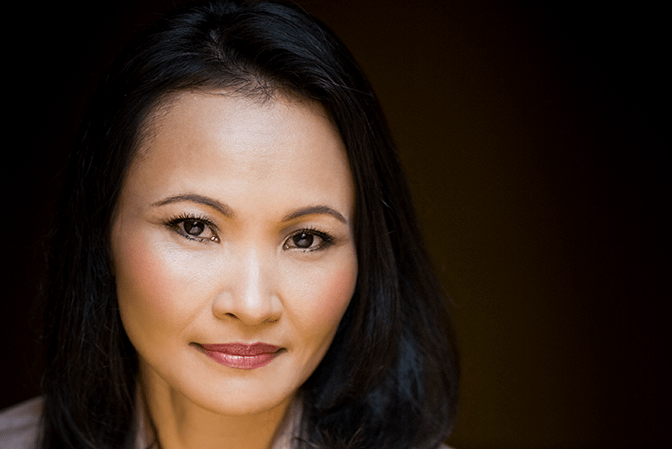
Rosa Yassin Hassan is a Syrian novelist and feminist writer and activist. She has published eight novels and many articles in various Arabic newspapers, periodicals and websites. Several of her novels have been translated into German and French, and her 2009 book The Guardians of the Air was longlisted for the 2010 Arab Booker Prize in 2010. A dedicated feminist, Rosa is active in various feminist groups. Rosa wrote and advocated for democracy in her home, and in 2012 she was forced to move into exile. She has been living in Hamburg, where she has taught ‘Arabic Roman Reading’ at the University of Hamburg.
Nawara Mahfoud is a Syrian freelance journalist and translator.
 PEN Transmissions